


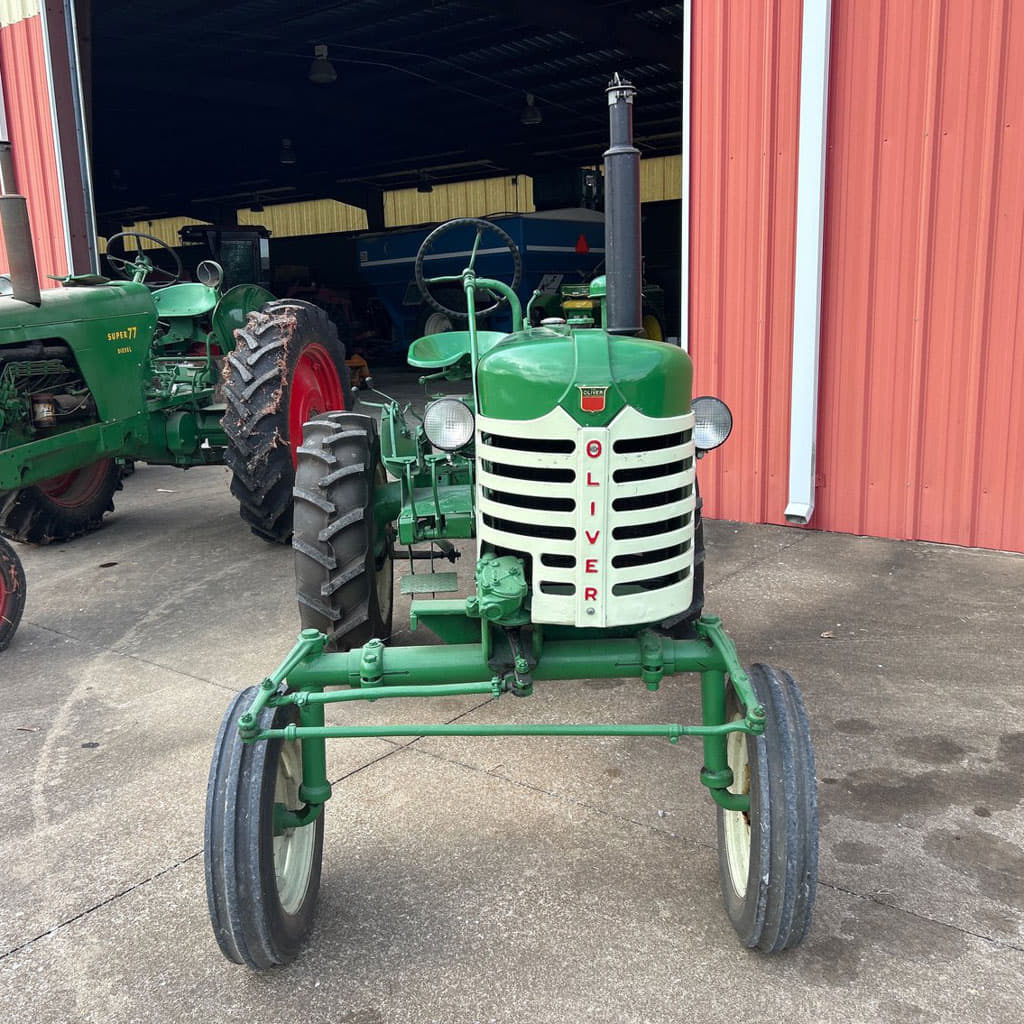
Oliver 440 and Super 44 listings on Tractor Zoom
Some tractors become legends because everyone had one. Others become legends because hardly anyone did.
The Oliver 440 (and the Super 44, for the matter) fall into the second bucket.
Most folks know Oliver for tractors like the 77, 88, 880, or the later 1800 and 1900 series. Those machines built a strong reputation in row-crop country. The Super 44 and the 440 were different. They were smaller, and targeted a niche market that Oliver had traditionally struggled to reach. Oliver’s offset tractors were plagued with a long development cycle, false starts, and internal skeptics. These factors all contributed to its downfall.
So let’s talk about them, and why they never really met Oliver’s expectations.
Quick note; these tractors were basically identical aside from paint and a redesigned hydraulic system on the 440. The Super 44 came first, and the 440 followed up a few years later. But for the good of the order, they were the same tractor.
An Idea Years in the Making
Oliver’s itty-bitty offset tractors didn’t appear overnight. Their story actually began during World War II.
According to T. Herbert Morrell, one of Oliver’s chief engineers, the company had toyed with offset tractor concepts since the 1940s. The problem was that Farmall had done it first. Not only that, they’d been smart with patenting some fairly critical design aspects. That left the engineers with a tough row to hoe, so to speak.
How do we build an offset tractor for the small acre farmer that won’t get us into legal trouble?
Some well-intended executives suggested a machine with a gearbox on the right and the engine/driveline on a diagonal towards the front left wheel. The engineers knew this wouldn’t work, but prototyped one anyway. It was tested internally in employees’ victory gardens near Charles City, Iowa. Workers could borrow the tractor to tend their home plots, giving engineers a chance to observe the machines under real conditions. Predictably, the prototype revealed a flaw.
Quite frankly, it was terrible. Operators had trouble watching the row ahead while keeping mounted cultivators aligned. Looking through a narrow opening behind the steering wheel proved tiring. They would almost become hypnotized trying to follow the plants. The diagonally-angled tractor probably didn’t help either. It’d have given me a headache!
Back to the drawing board…
So, the engineers went back to work.
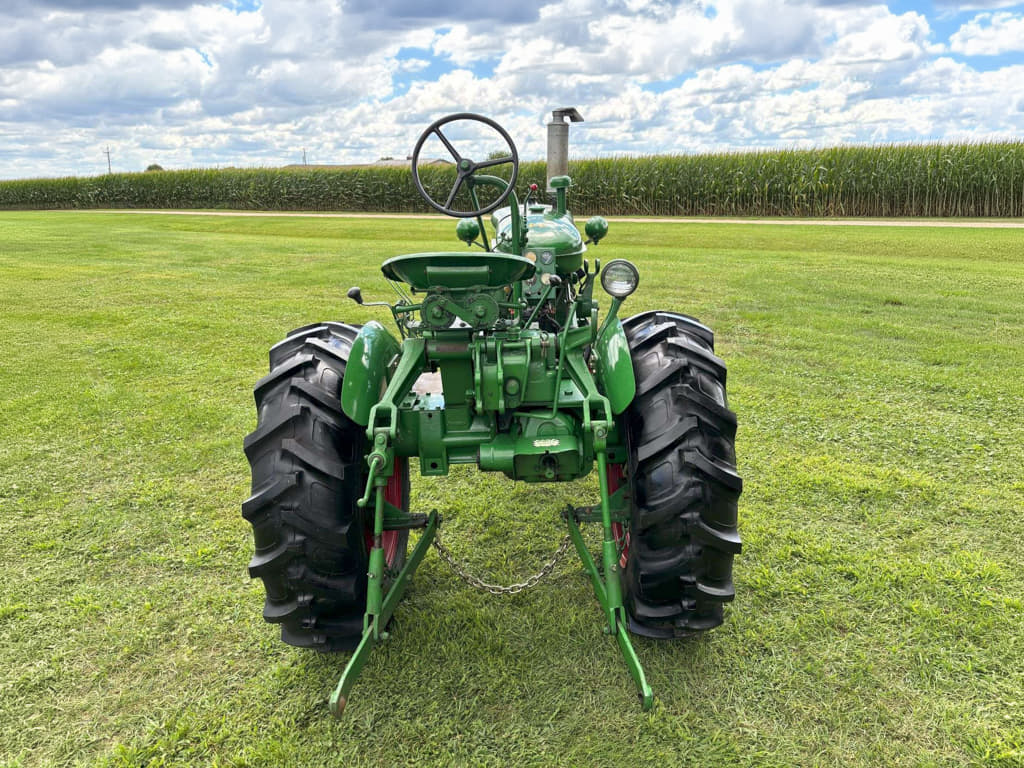
Eventually, they settled on a design that moved the engine off to the left side and had the operator positioned a little right of center. The offset concept offered a much clearer view down the row, and I’d imagine it was a lot easier to drive straight!
Now they just had to prove it worked in the field. They built four experimental units and sent them to a large farmer in South Texas where they could be properly stress-tested. Meanwhile, Oliver’s marketing people were surveying dealers, attempting to figure out how many tractors they could sell. Apparently, dealers weren’t confident that there was a market, because the project was put on the shelf indefinitely. Seems like maybe the cart got in front of the horse there…
A different approach…
Several years later, the small farmer idea came up again, but with a different approach this time. Engineers were asked to modify a 66 to go toe to toe with Farmall’s Super AV. The idea was that maybe a 66 could be modified to cultivate taller crops. The changes were fairly simple, but when they put pencil to paper, the cost came in at $150 more than the cost of a decked-out Super AV, so once again the project was mothballed. It was probably for the best anyway, because the 66 was twice the size of the Farmall. It just wasn’t the same class of machine.
However, the one-row project for the small farmer wasn’t quite dead yet.
The Super 44 finally takes off…
Sometime in late 1953 or maybe the year after, Oliver’s aviation plant in Battle Creek, MI was beginning to wind down its operation building airplane parts for Boeing spy planes. They weren’t ready to shut down the plant, so they were looking for projects to keep it operating. So the engineers in Charles City boxed up all the plans and drawings and sent them to Michigan. And when they’d buttoned up some of the details like the hydraulic system and such, they started building them in the South Bend plant.
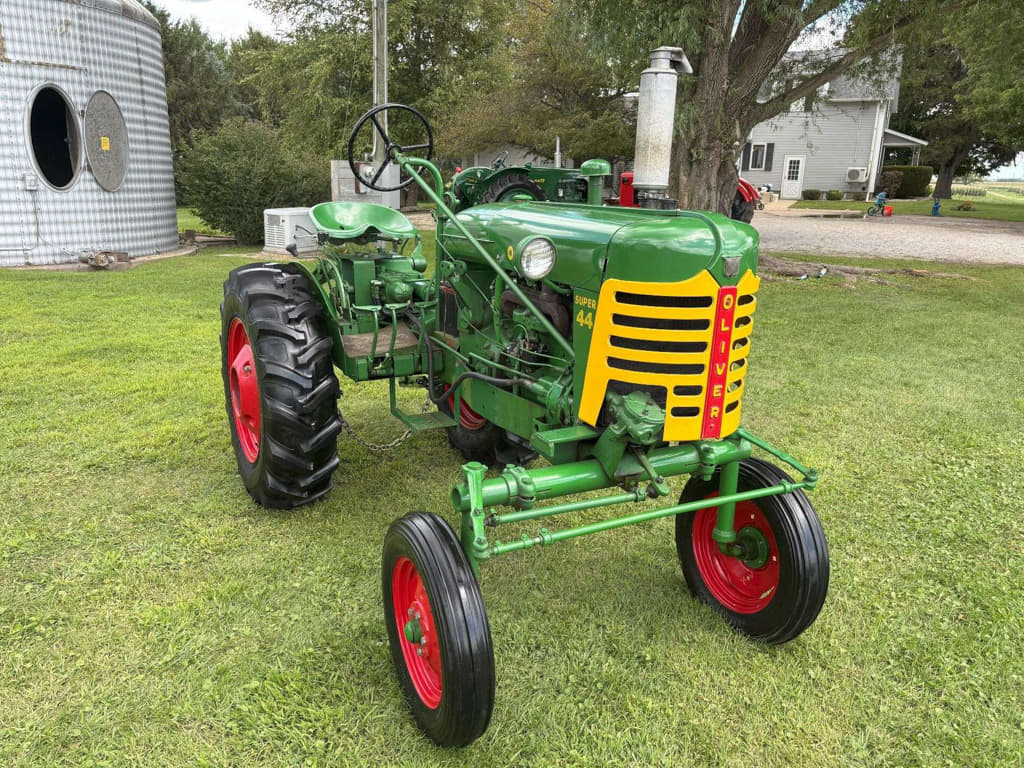
Introduced in 1957, the Super 44 became Oliver’s first production offset tractor. It featured a wide front axle and a right-hand operator position. The tractor used a Continental four-cylinder gasoline engine backed by a four-speed gearbox. Although it was never tested, they claimed it made 25 horse on the drawbar and 28 at the PTO.
Oddly enough, though, the Super 44 wasn’t finished traveling. Only 775 tractors were built before Oliver closed the South Bend plant and moved all tractor production back to Charles City, IA. Kind of a short flight, if we’re keeping with the whole airplane metaphor, but the company still felt that there was promise in it.
Enter the 440
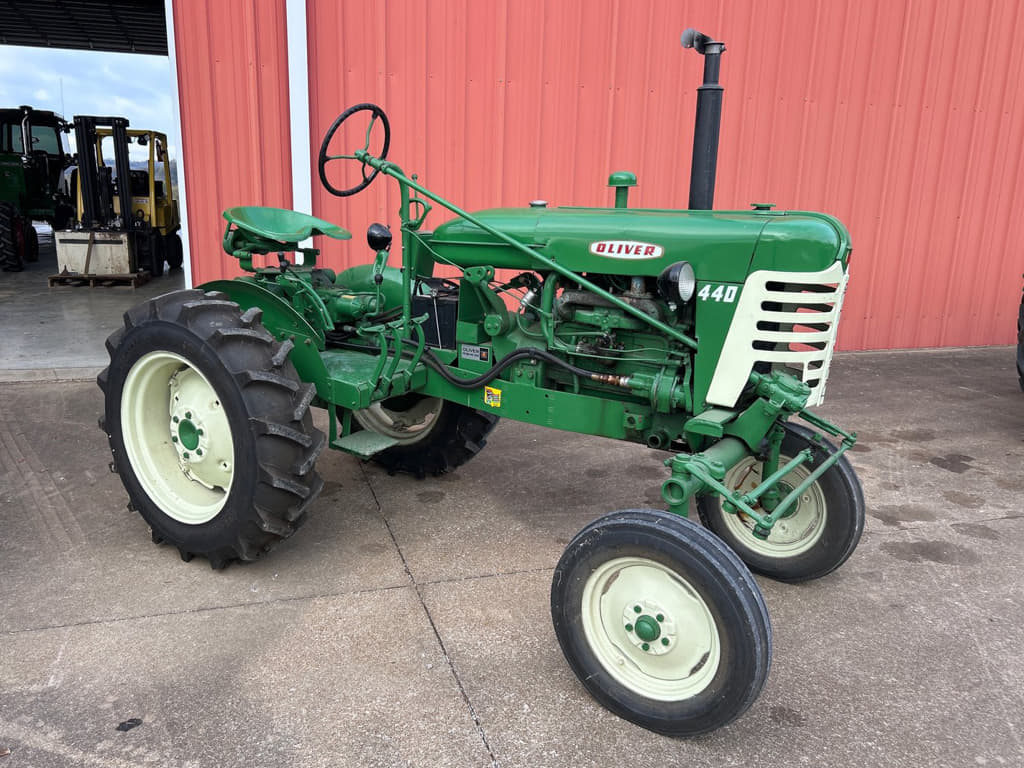
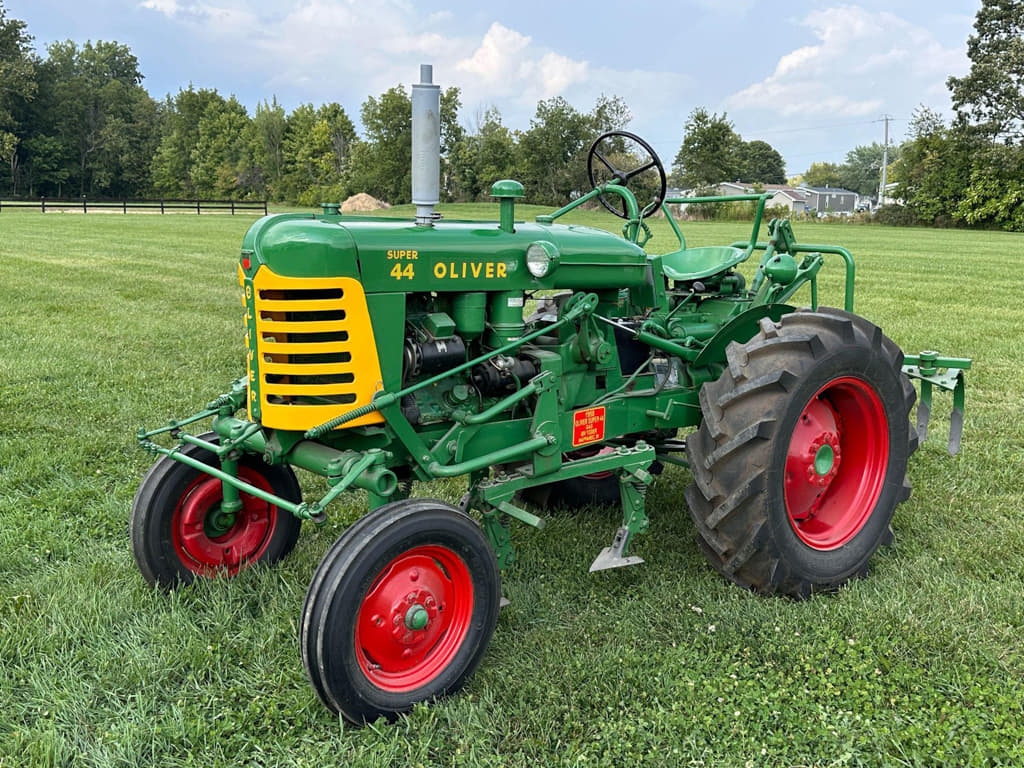
While the Super 44 wasn’t a runaway success, it was popular with tobacco farmers in the south. The biggest issue that farmers encountered was a finicky hydraulic system that had been sourced from Cessna, so the engineers decided to re-engineer that with a system of their own. The new one was based on the hydraulics from the 550, and used 125 less parts. Once they were happy with it, the tractor was reintroduced as the 440 in line with the “Hundred Series” tractors. It was in production from 1960-1963, with similar production numbers to the Super 44.
So why didn’t it sell?
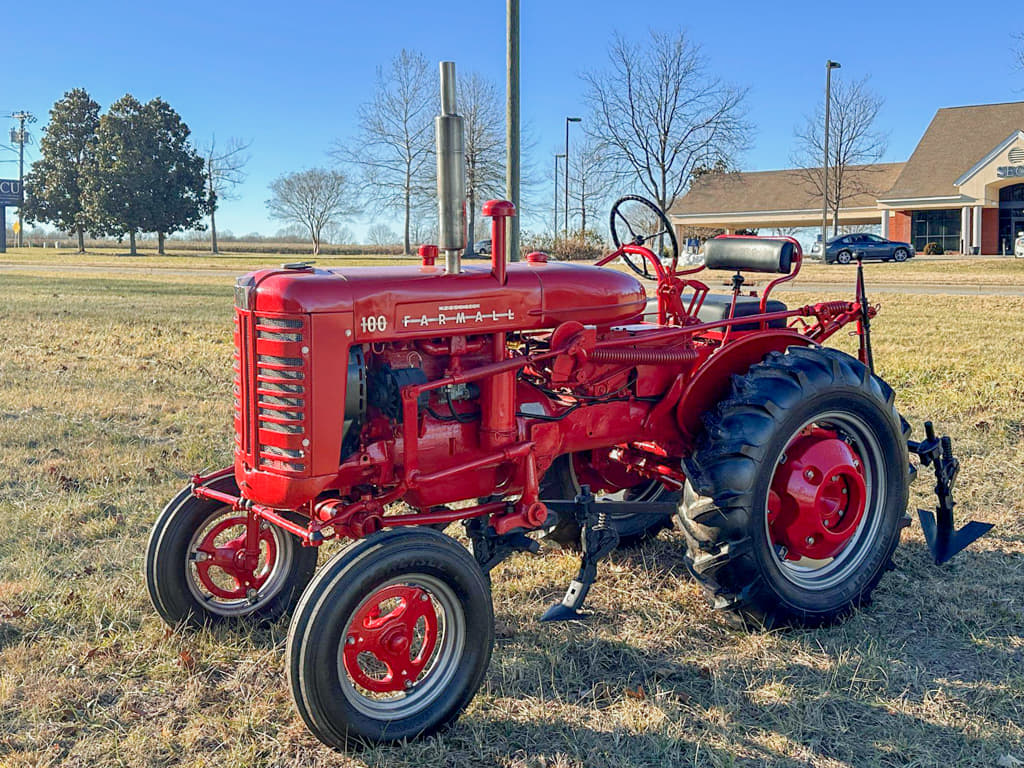
At the end of the day, I think it was a combination of a couple of things. The fact is, Oliver was late to the party. The long development cycle, multiple false starts, and internal challenges kept the tractors from being released when the market was hot. International Harvester had tremendous success with offset models like the Farmall Super A, 100, 130, and 140. They had a loyal following among vegetable growers and tobacco farmers. Ford and Deere had compact utility tractors of their own, and Allis had lots of success with the G as well. The market was crowded, and by the time Oliver had something ready to go, there just wasn’t much of the pie left. That ship had sailed.
It wasn’t a bad tractor. It simply showed up last to the party.
Why the Super 44 and 440 are still important today…
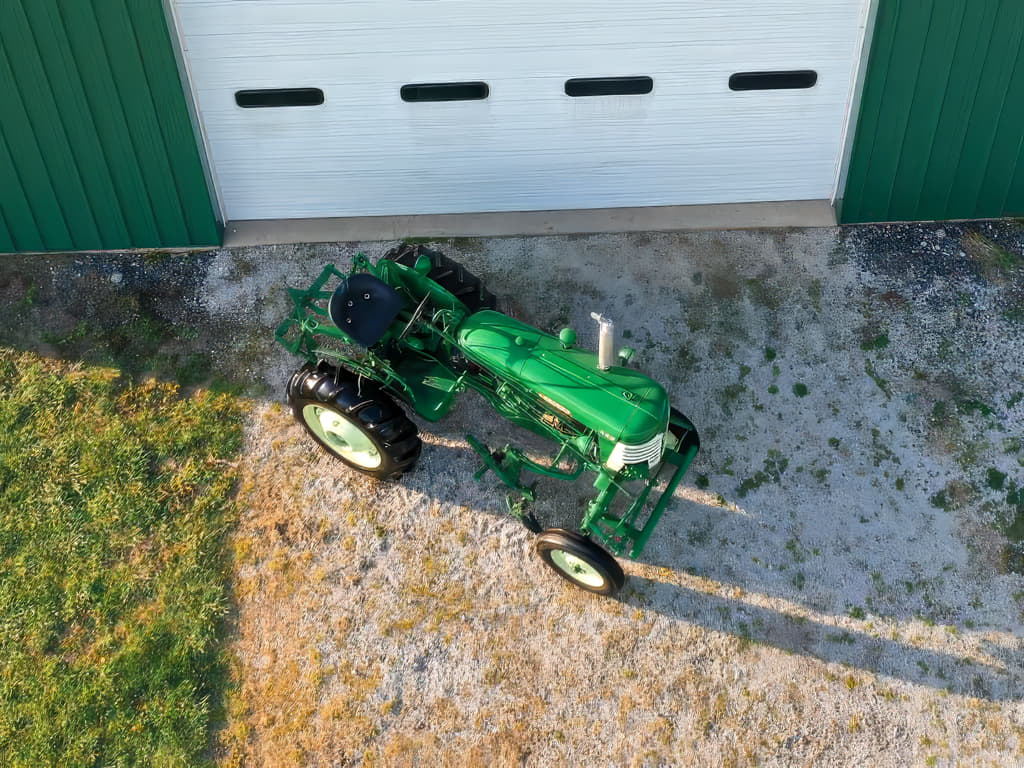
Oliver’s little bitty tractors tell a different story than many of the company’s better-known tractors.
They weren’t designed to dominate the horsepower wars. They weren’t built to become the backbone of Midwestern grain farms, either. Instead, they represented persistence. Oliver engineers spent nearly two decades refining the idea. They tested prototypes, scrapped concepts, solved problems, and fought internal skepticism before finally bringing the design to market. Would they have been ahead if they’d thrown in the towel and scrapped it? Maybe. Maybe not. Hindsight is 20/20.
The Super 44 introduced the concept. The 440 refined it. It just came out a little too late to be a great seller.
Today, spotting one means encountering a tractor that many enthusiasts have never seen in person. It may not have transformed the industry or topped the sales charts, but they’ve carved out their own place amongst the Oliver faithful through practicality, experimentation, and scarcity.
And that’s what makes the example coming up for auction so intriguing. Beyond the paint and sheet metal sits one of Oliver’s forgotten experiments. The next question becomes simple.
What happens when one of Oliver’s rarest production tractors finally comes up for sale? Because there’s one coming up on an auction in Fennimore, WI, and it might be one of the nicest ones we’ve ever listed on TZ.
Dale Vogel and his Oliver 440
Dale Vogel was a farmer in southwest Wisconsin. He worked the ground for 41 years and cared deeply about his community. In his spare time, he spent years involved in local agricultural organizations and advocated for dairy farmers dealing with stray voltage issues, among many other things.
Along the way, he helped found the Boscobel Antique Tractor Club. After retiring from farming in the late 1990s, he built a reputation as one of the area’s most meticulous tractor restorers. He also had a soft spot for local tractors, and while this Oliver 440 doesn’t have ties to Grant County, several tractors on the sale do.
And although he restored some beautiful two-cylinders over the years, according to his kids, Olivers were always his first love.
The 440
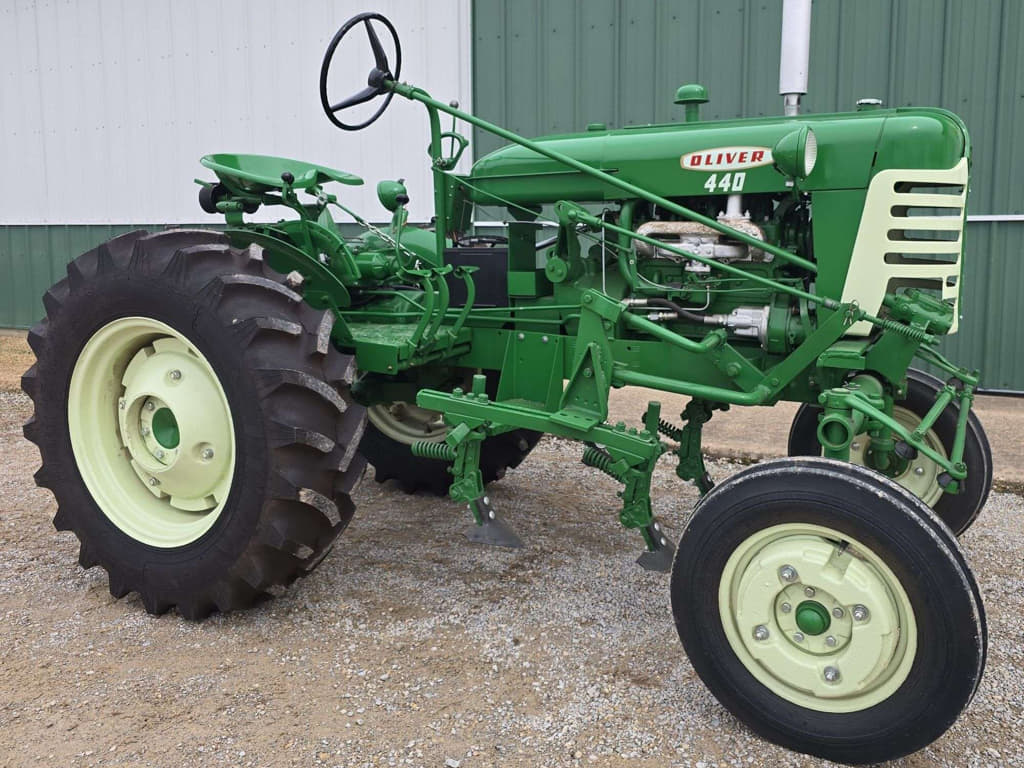
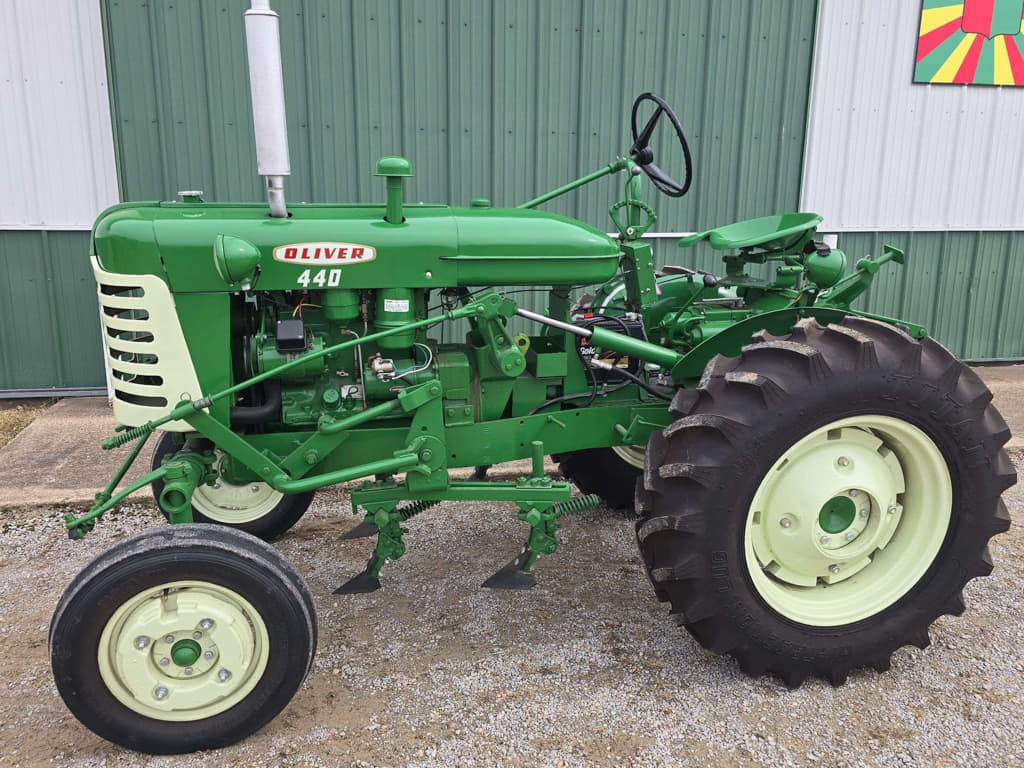
On paper, this is a neat little tractor. Oliver built only around 700 Model 440s, making them a rare sight today. This example may be one of the earliest survivors as well. Its build date was January 5, 1960. From there, it passed through Oliver’s Atlanta branch house before selling new in Statesboro, North Carolina. Years later, it found its way to Dale Vogel’s shop.
But even though there’s some rarity there, that isn’t what caught my attention.
A friend once walked into Dale’s shop and found him sanding rust from the underside of a John Deere 630 floor pan.
“Y’know, Dale, nobody’s ever gonna see that, right?” his friend asked.
“Yep, you’re right,” Dale replied. “But I’ll know.”
That simple answer tells you almost everything you need to know about Dale Vogel.
He believed details mattered, even the ones hidden from view. While sorting through Dale’s shop after his passing, auctioneer Curt Kramer found old Polaroids and photos showing tractors in varying stages of disassembly. Dale used them as road maps during reassembly so everything went exactly where it belonged. If he ran into something abnormal, he studied it until he understood it. Then he put it back together the right way.
That mindset is visible throughout this Oliver 440. The lights work. The gauges work. The factory hydraulics function as they should. It carries a full set of wheel weights, fresh rubber, and the kind of careful attention to detail that can’t be faked. From where I’m sitting, this tractor is more than one of Oliver’s rarest production models. It’s a reflection of the man who restored it. I mean, I suppose they’re all reflections of Dale, when it’s all said and done. That’s why he put so much effort into getting them right.
And if there’s a spot on this tractor that nobody will ever see, chances are Dale made sure it was right anyway.
Because he would’ve known…
Dale Vogel’s Estate on Tractor Zoom


