


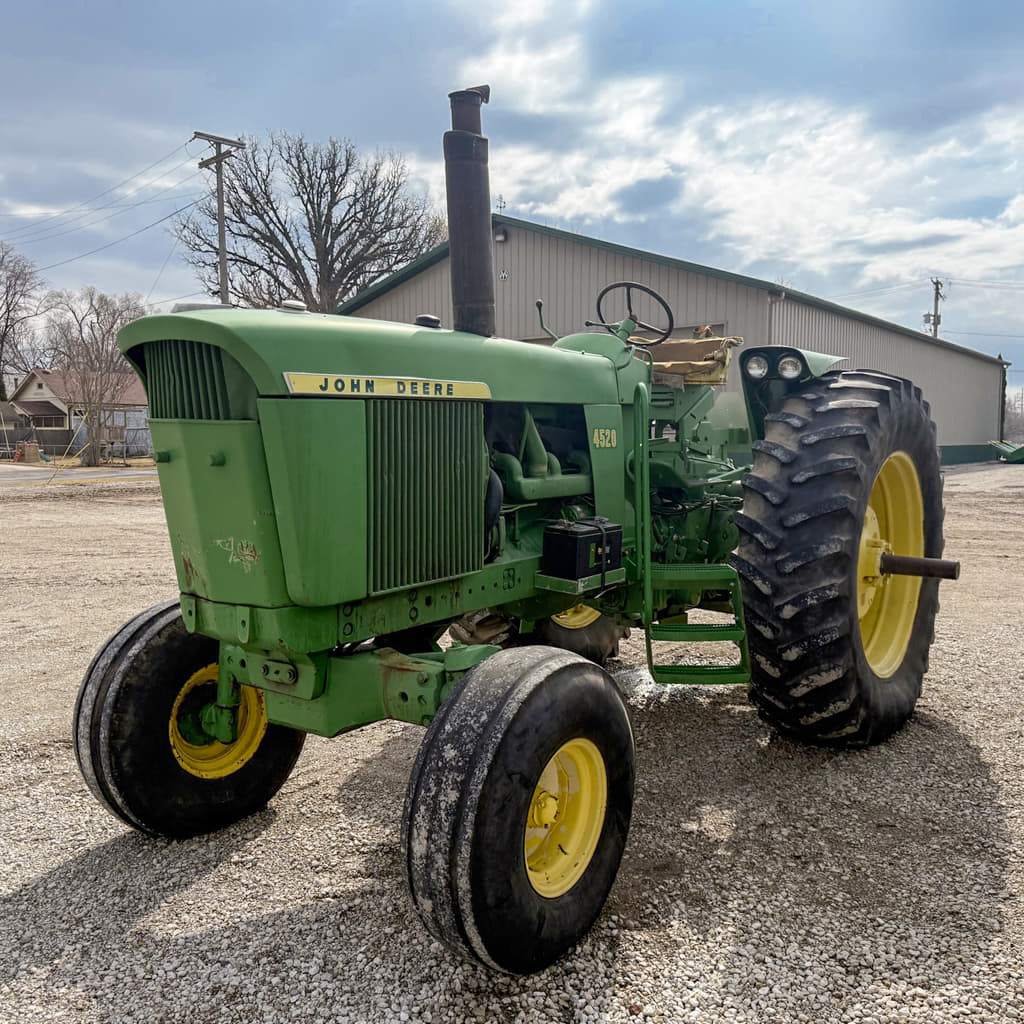
John Deere 4520 listings on Tractor Zoom
By the late 1960s, John Deere had a good problem on its hands.
The New Generation tractors—introduced in 1960—had completely reset the company’s trajectory. Models like the 3010 and especially the John Deere 4020 didn’t just sell well…they dominated. The 4020, in particular, set the standard for everything else on the market.
But as the decade wound down, horsepower demands climbed fast. Implements got wider, farms got bigger, and farmers started focusing on efficiency instead of just getting through the day. Deere needed something above the 4020—something that could handle heavier tillage without pushing customers into a substantially heavier model like the 5020. A “Super 4020” if you will.
Enter the 4520.
Where the 4520 fit in Deere’s lineup
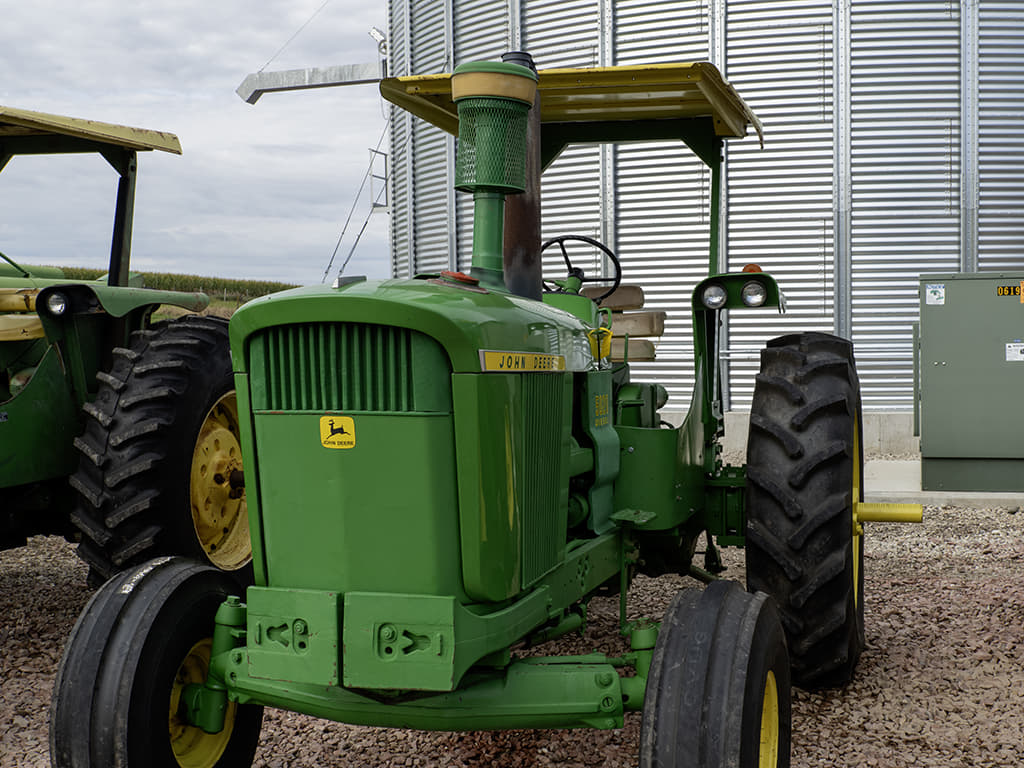
The John Deere 4520 hit the market in 1969 as part of an expanded New Generation lineup. It landed squarely between the 4020 and the 5020, but it filled a very specific role. Deere aimed it at farmers who wanted more horsepower in a row-crop package without giving up versatility.
In practice, Deere took the 4020 platform and pushed it harder. They added weight, turned up the power, and bolted a turbocharger onto the 404 cubic-inch diesel. That turbocharger marked a major step forward—it was the first time Deere used one on their own engine in a production tractor.
On paper, the formula made sense. The tractor delivered roughly 120 horsepower, offered Syncro-Range or PowerShift, and gave farmers a machine that could pull bigger tools without jumping all the way to a 5020.
For a moment, it looked like Deere had nailed it.
What the 4520 Did Right
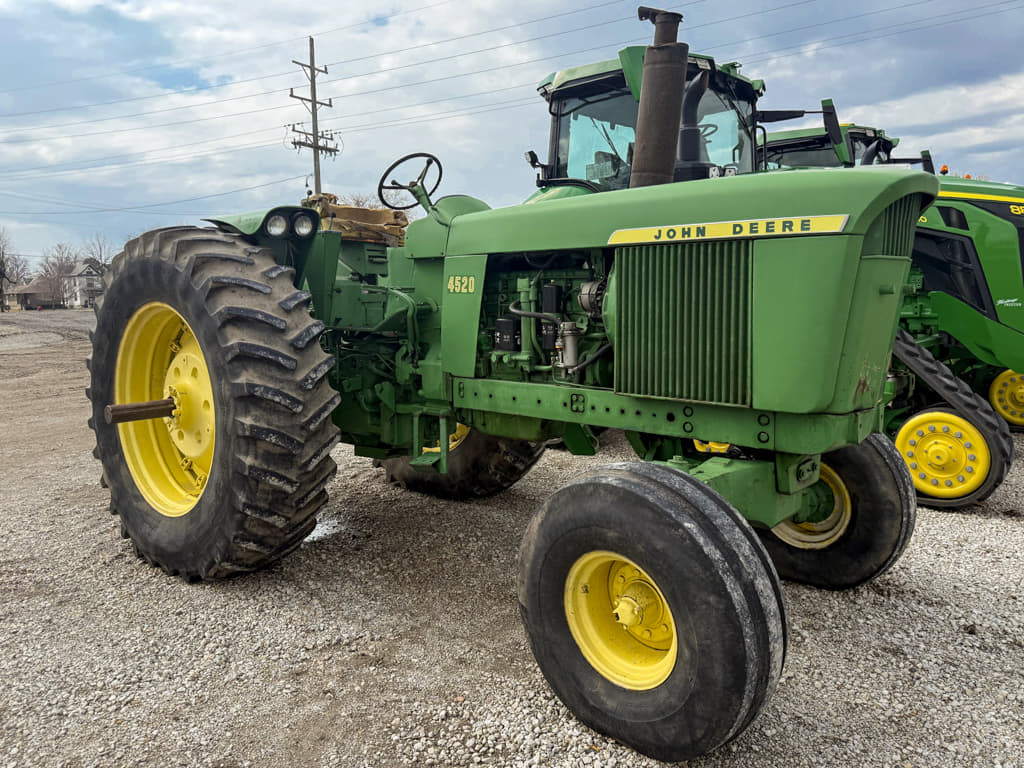
The 4520 brought real gains where farmers could feel them.
First, the added horsepower showed up in the field. Operators coming out of a 4020 noticed the difference right away, especially when they leaned on it in heavier tillage. The turbocharged engine gave the tractor more low-end pull and let it carry speed better under load.
Deere also kept the platform familiar, and that was important. Farmers didn’t have to relearn the tractor. If you knew a 4020, you could run a 4520 without missing a beat. That kind of continuity made adoption easy.
The added weight helped too. It gave the tractor better footing in the field, and paired with Deere’s strong hydraulic system, it turned the 4520 into a capable machine for a wide range of work.
Just as important, the 4520 pushed Deere into the turbocharged era. That move shaped the direction of their engines for years to come.
Where Things Went Sideways
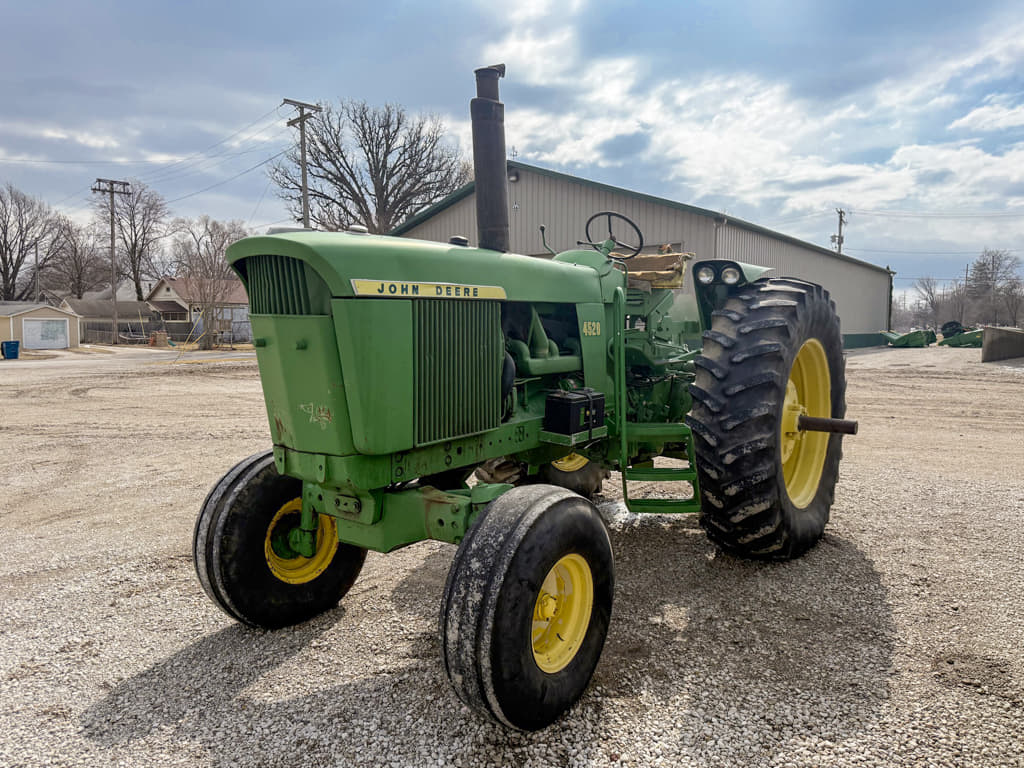
The problems showed up pretty quickly—and they stuck.
The turbocharged 404 engine drove most of them. Deere had the right idea, but they hadn’t fully sorted out the details. Early tractors struggled with air intake and filtration issues that could let dirt into the engine. That kind of problem doesn’t stay small for long.
Fuel system issues added to the trouble. Injectors and general engine durability under load didn’t always hold up the way farmers expected, especially in a tractor that size.
Then came the perception issue. On paper, the 4520 had more power than a 4020. In the field, though, some operators felt like it didn’t pull the way it should. The tractor was beefier for sure, but the engine didn’t always deliver the kind of lugging power farmers needed. That mismatch hurt its reputation.
The PTO setup didn’t help its case either. Deere geared the 4520 primarily for 1000 RPM PTO work, which limited its usefulness for farms still running a lot of 540 equipment.
And then there’s the timeline. Deere only built the 4520 from 1969 into 1970, with just over 6,000 units leaving the factory. That short run tells you everything you need to know—Deere recognized the issues and moved to fix them.
Deere’s Response: The 4620
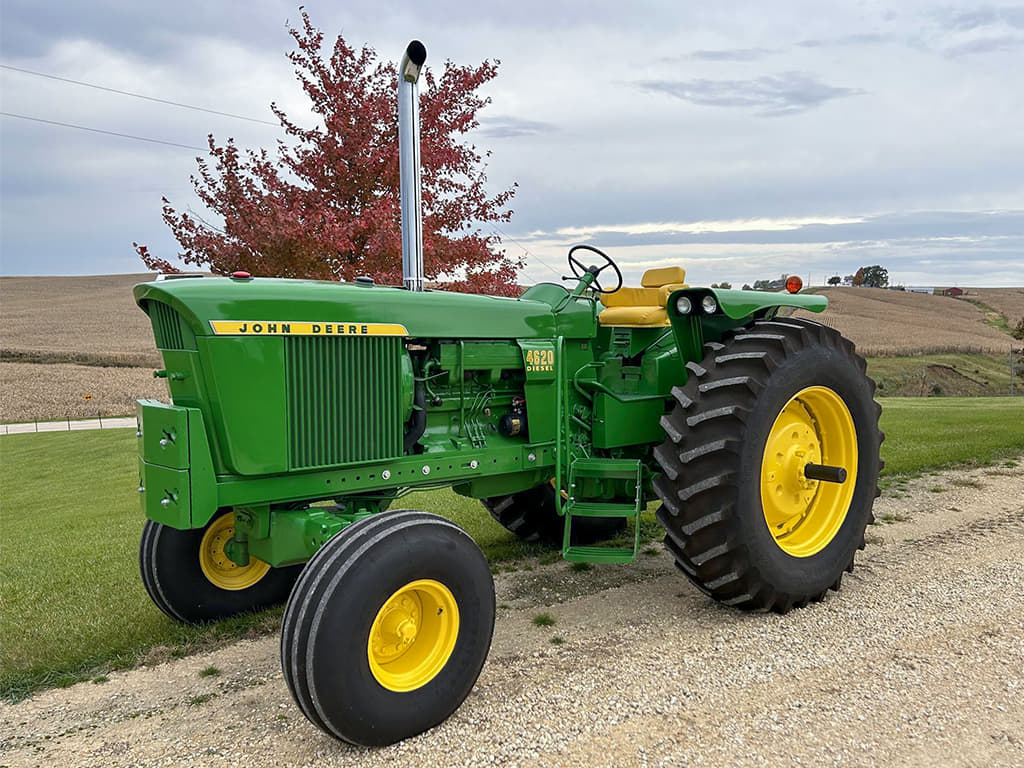
Deere answered quickly. In 1971, after building 7,894 units (1,666 of which were Power Shifts, the rest Syncro Range), they replaced the 4520 with the John Deere 4620. This wasn’t just a refresh—it was a correction.
They re-engineered the 404, adding an intercooler, which improved both performance and durability by cooling the intake air before it entered the engine. That change alone made a noticeable difference in how the tractor handled sustained load. They also reworked the fuel system, addressing injector issues and improving overall reliability. At the same time, they redesigned the air intake and filtration system, eliminating one of the biggest weak points from the 4520.
With those changes in place, the 404 engine platform finally delivered what farmers expected. The 4620 pulled strong, held up better under pressure, and built the kind of reputation the 4520 never quite earned.
The Upgrade Program
Deere didn’t leave 4520 owners hanging. They offered upgrade paths that brought tractors up to 4620 specifications, including engine replacement. Plenty of owners took them up on it, which explains why a lot of 4520s today carry updated components. From where I’m sitting, that move said a lot. Deere knew they needed to fix the problem, and they made sure their customers had a path forward.
Legacy: Lackluster Option or Stepping Stone?
The 4520 sits in an interesting spot today. Some collectors like it for its short production run and its role as Deere’s first turbocharged row-crop tractor. It marks a clear turning point in the way Deere looked at engines.
As a working tractor, though, it depends on the machine. A well-maintained or updated 4520 can still earn its keep. One that hasn’t been sorted out may still show the same weaknesses it had when it was new.
In the bigger picture, the 4520 tells a story about continuous improvement. Deere pushed into higher horsepower, learned some hard lessons, and came back with a better machine.
At the end of the day, I think that if you’re looking at it from the present day, it’s a stepping stone. If the 4020 set the standard, then the 4620 refined it as a larger tractor. The 4520 sat right in the middle. It was Deere’s attempt to address a growing market, and the tractor that made them figure out how to do it right. (And I guess if we’re being historically accurate, you could make a strong case that the 4320 was the ultimate refinement of the New Generation row crop line. It was the “Super 4020” that farmers wanted all along.)
The John Deere 4520 you can buy today…
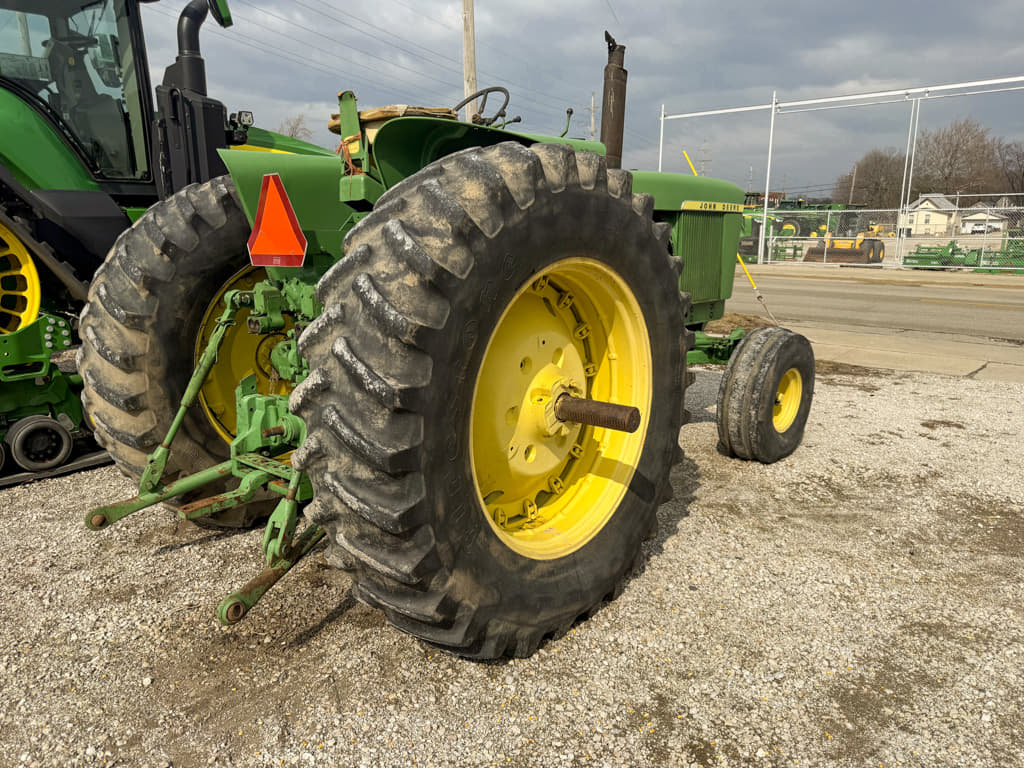
All of that history makes the 4520 an interesting tractor on paper. But where things really get fun is when one shows up in the real world—especially one that hasn’t been altered much over the years. Such is the case with this one sitting along the highway at Heritage Tractor’s lot on the east side of Pontiac, Illinois.
I talked to Matt Aeschleman Jr. at Heritage the other day about it. Apparently, it was part of a three-part trade-in deal with a 4020 and a 4320, and this is the last one of the group still on the lot. And out of the three, this one might be the most interesting—not because it’s perfect, but because it’s pretty darn original.
This is technically a three-owner tractor, but it’s only lived on two farms in Illinois its whole life. The most recent owner had it for nearly 20 years on a cattle operation and didn’t put a lot of hours on it. Before that, his dad bought it from the original owner with relatively low hours already on the clock. Today it sits with about 7,700 original hours.
And here’s where it starts to line up with everything we just talked about.
This tractor appears to be very original. It hasn’t been updated to 4620 specs, which means that aside from cosmetics and the upsized rubber, you’re looking at a fairly accurate snapshot of what a 4520 was when it left the factory—for better or worse.
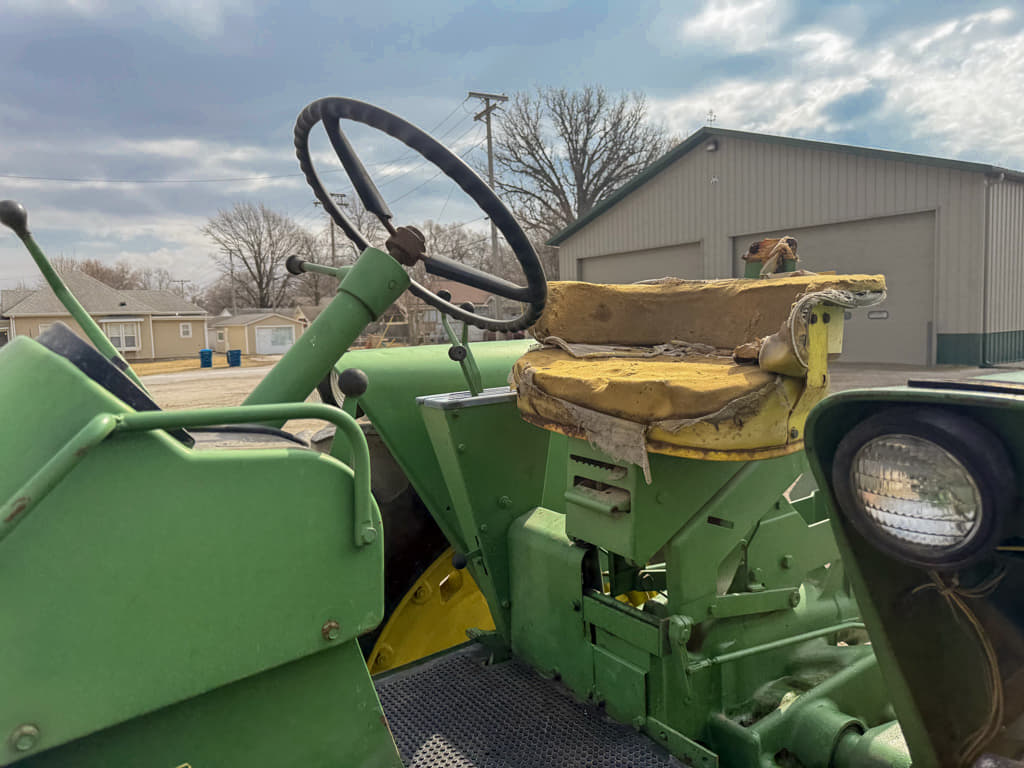
Cosmetically, it’s got the kind of look that makes a lot of Deere fans stop and take a second glance. The paint is original, and while it shows its age, it hasn’t been redone multiple times or covered up. The sheet metal is straight, which is half the battle on something like this. The rear tires are 20.8-42s with some tread left in them, while the fronts are pretty well worn. The seat is pretty chewed up as well, but all of those things are pretty easy fixes.
Mechanically, it tells a pretty familiar 4520 story.
When Heritage Tractor took it in, it didn’t run well. It hadn’t seen much use over the past few years, and old fuel had taken its toll. It needed attention before it was going to do much of anything. They went through it, drained the system, and worked through the usual suspects—including replacing components in the fuel system.
And here’s a detail you don’t hear every day—they had to call in one of their retired technicians to get the injection pump dialed in. He was one of the few people in the area who could still properly tune a Roosamaster pump. Once he got his hands on it, the tractor came back to life and now runs the way it should.
At the end of the day, according to Matt, it’s a very original tractor with good bones. And I think that’s really the key here.
Because when you step back and look at it, this tractor kind of represents the 4520 story in a nutshell. It’s not perfect. It never was.
But it’s largely untouched, it’s complete, and it gives you options.
You could take it back to factory-correct and preserve a piece of Deere history—one of the first turbocharged row-crop tractors they ever built. Or, if you wanted to go bruise some egos at the county fair, it wouldn’t take much to turn this into a farm stock pulling tractor. The foundation is already there. Lighten it up, bolt a little bigger charger on it, and go have some fun!
And maybe that’s the best way to look at a 4520.
Not as the finished product—but as a tractor that still gives you something to work with.
Here’s a link to the listing. Check it out when you get a minute if you’re looking for a 4520!


