


John Deere 4440 listings on TZ
About a year ago, maybe a little more, I said that we’ll see a $100,000 John Deere 4440 within the next five years. I don’t know if anybody took me very seriously, but I said it anyway. I’m sure lots of folks said, “Sure…whatever, bearded guy.”
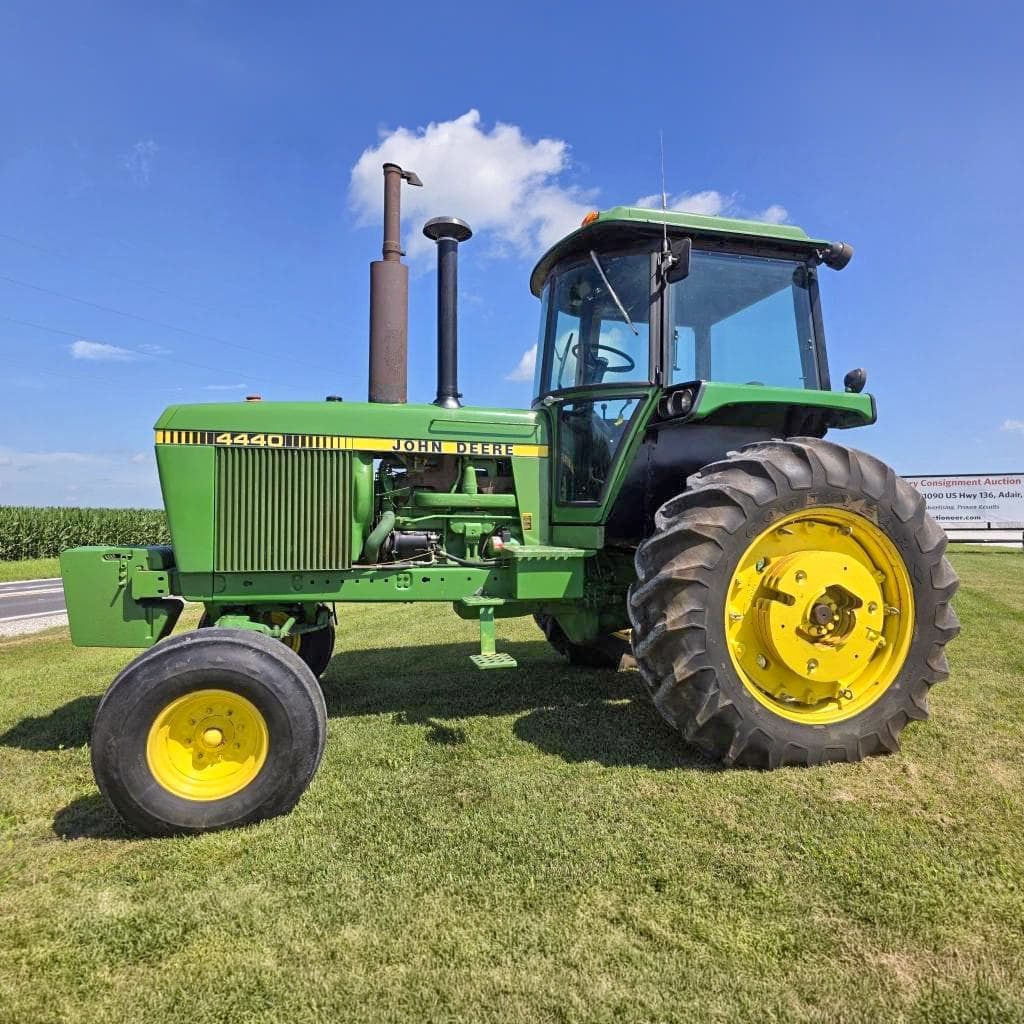
Then, a month or two ago, west-central Illinois auctioneer Kyle Kelso found one sitting in a McDonough County barn with just 1,071 actual hours. It’s an original-paint late 1980 model that has remained in the same family since new. The original owner passed away in the early 1990s, and the tractor went to his son. Now, it and several other low-hour John Deere tractors from the estate will sell on Kyle’s annual late-summer consignment auction.
That would make it one of the lowest-houred 4440s we’ve seen at auction in a very long time, perhaps a decade or more.
Could this be the tractor that gets us there?
Perception isn’t always reality
The data says that it’s not out of the question, and I posted a video about that the other day on our social media channels. I asked, “What do you think it’ll bring when Kyle hammers it sold in a few weeks?”
Now, I wouldn’t say that the video has gone viral, but it has people talking. Some think it could challenge the existing 4440 record. Most think the entire idea is ridiculous.
“A hundred thousand dollars for a 4440?”
“It’s just a 46 year old farm tractor.”
“It’s utterly nuts to think that somebody would pay that much for a 4440.”
I understand where that reaction comes from, I truly do. Thousands of 4440s still earn their keep every day. They pull balers, feed cattle, run augers, and handle countless other jobs. Nobody is pretending they’ve suddenly stopped being useful tractors. However, that doesn’t mean they can’t also become collectible. It’s just hard to wrap our minds around the concept that the baler tractor in the shed is now being sought-after by collectors.
What the data says
Regardless of what your head says, though, the numbers don’t lie. They back up that shift, too. I went into our TZPro auction-results database and averaged the upper half of all John Deere 4440 sales from each year. In 2019, those nicer tractors averaged $22,512. By 2022, the number had climbed to $32,668. The market cooled somewhat over the next few years, likely due in part to a softer farm economy. Even so, the upper-half average remained above 2019 levels.
Year to date, though, the number has climbed to $34,153. That’s nearly 52 percent higher in raw dollars than it was seven years ago. After adjusting for inflation, the increase is closer to 16 percent, but that still means nicer 4440s have gained real value since 2019. This isn’t an average of every clapped-out chore tractor that crossed an auction block. It represents the better half of the market, and it shows that buyers are paying considerably more for nice 4440s than they once did.
The Collector Market Doesn’t Stand Still
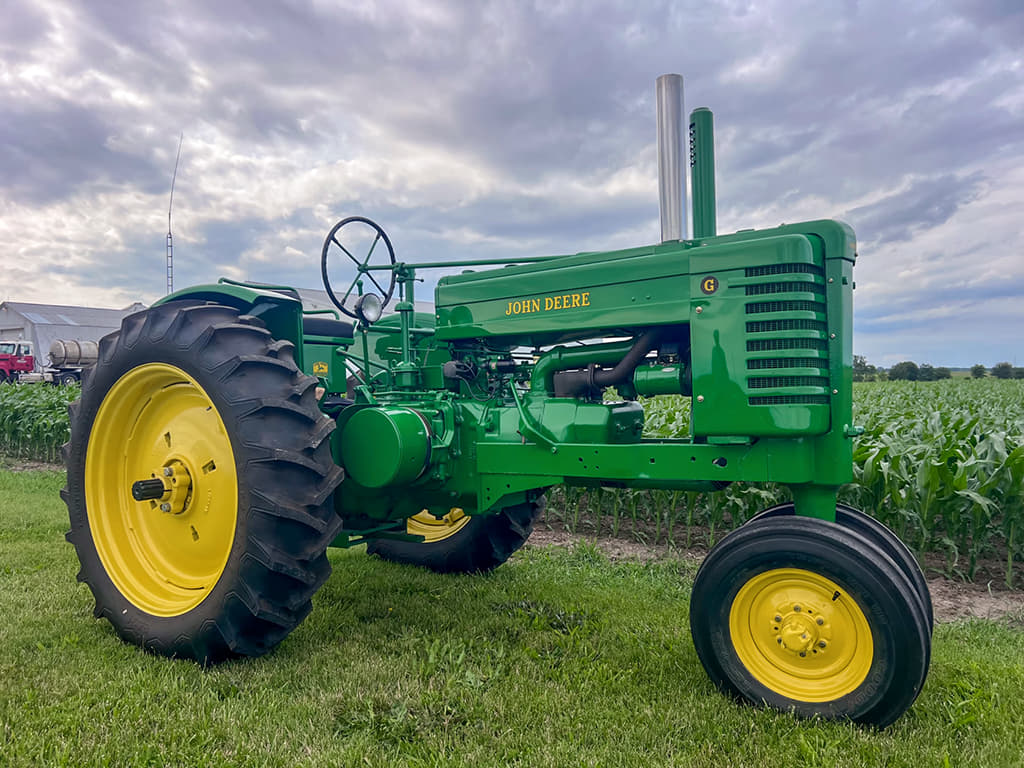
At the end of the day, there’s a good reason for all of this. See, collector markets change as the people participating in them get older. For years, John Deere two-cylinders formed the backbone of the green tractor hobby. They were the tractors many collectors remembered from their childhoods. They were also the machines their fathers and grandfathers bought new. Those tractors carried memories, stories, and plenty of emotional value. The market for them hasn’t disappeared, and exceptional examples can still bring strong money. However, as those collectors begin to slow down, the two-cylinder market has lost some ground from its peak. Parts of the New Generation market don’t seem quite as steady as they once did, either.
Meanwhile, nice original (or correctly-restored) Generation II and Iron Horse tractors continue to pick up steam. Collectors in their 40s and 50s are reaching the point where they can chase the tractors they grew up around. For many of them, that means a 4430, 4440, or another tractor from a similar era. Maybe Dad’s first new machine was a 4430, or a 4440 was the last tractor Grandpa bought new. Maybe they spent their childhood riding on the armrest while somebody worked ground or chopped silage. Those memories now carry the same emotional weight that two-cylinder stories carried for an earlier generation. As a result, they start looking for nicer SoundGards, either to put to work in some capacity, or to preserve…just like their dads did with New Gens or two-cylinders.
Over the past few years, we’ve seen several impressive collections built around these tractors. Some of those collections have already sold, while others are beginning to come to market. If you’re watching for it, the trend is becoming difficult to ignore.
The market is paying attention because the buyers are there. SoundGard-era tractors aren’t waiting to become collectibles someday. They already are.
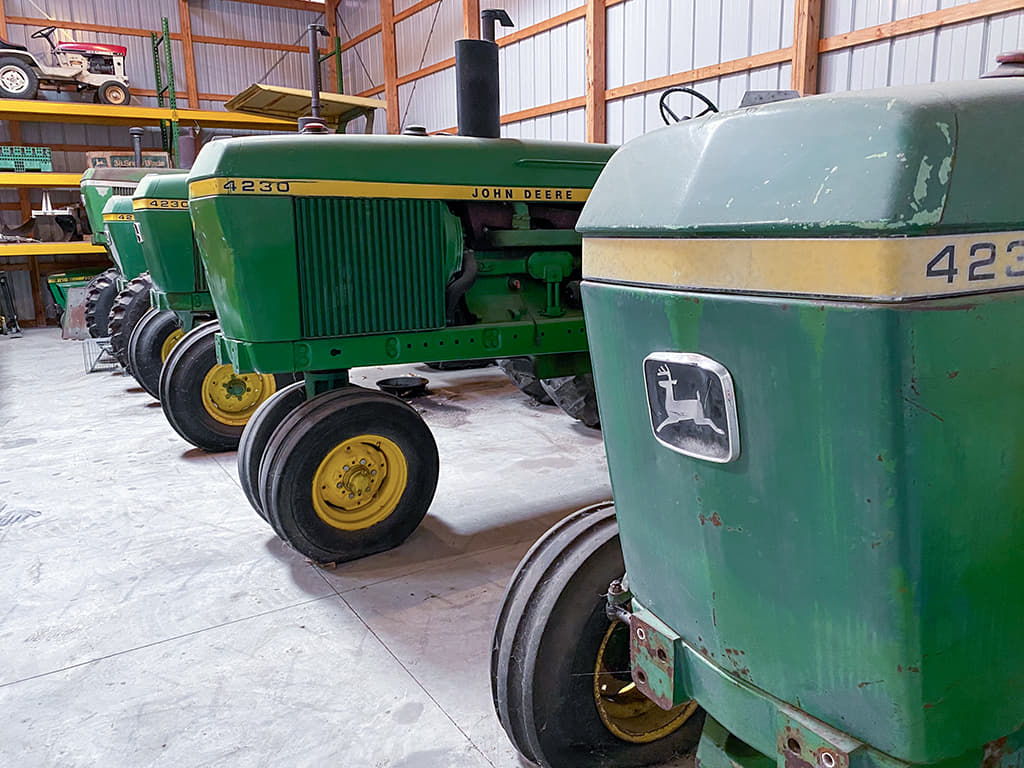
Why This 4440 Is Different
The tractor Kyle’s selling has the sort of history that gets collectors interested.
The story goes that a farmer bought it new in 1981 but didn’t use it very much. He passed away in the early 1990s and left the farm and tractor to his son. The son wasn’t particularly interested in farming. He rented out the ground, and the 4440 got parked. There it sat for more than 30 years. After the son passed, his widow decided to sell what remained.
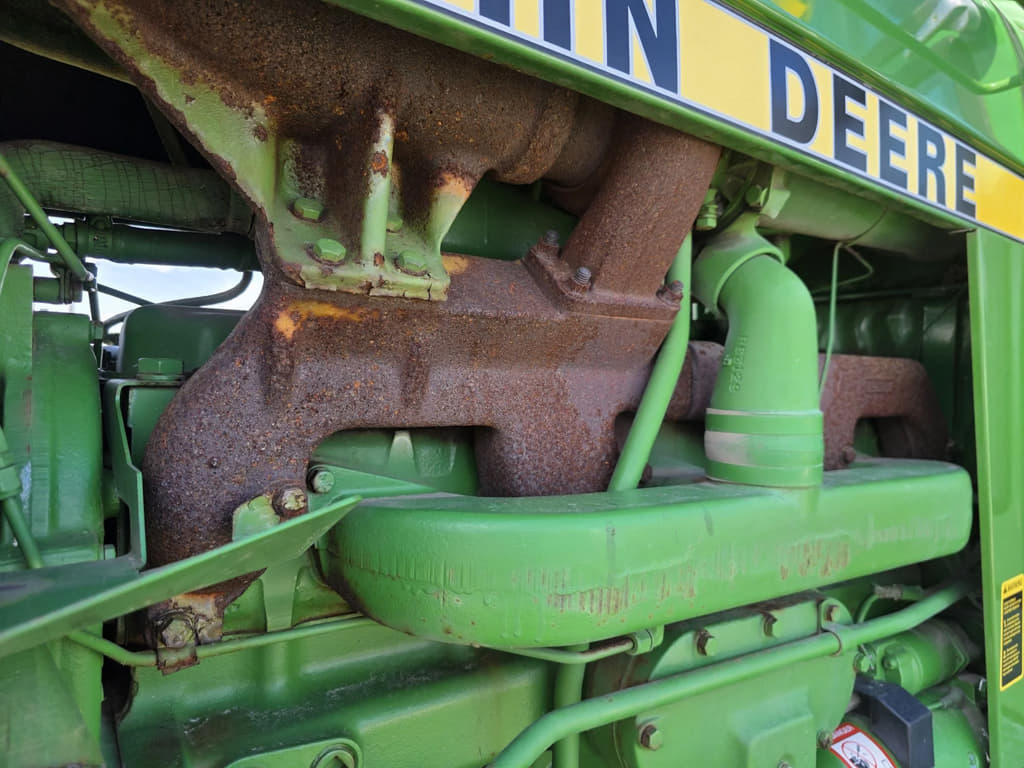
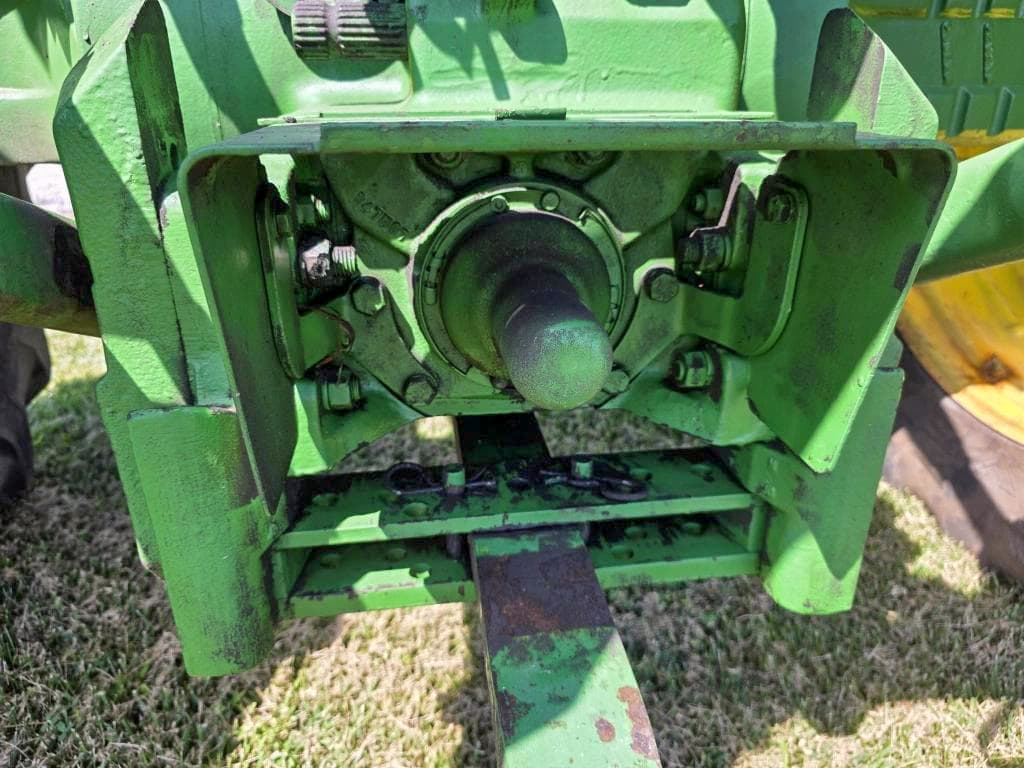
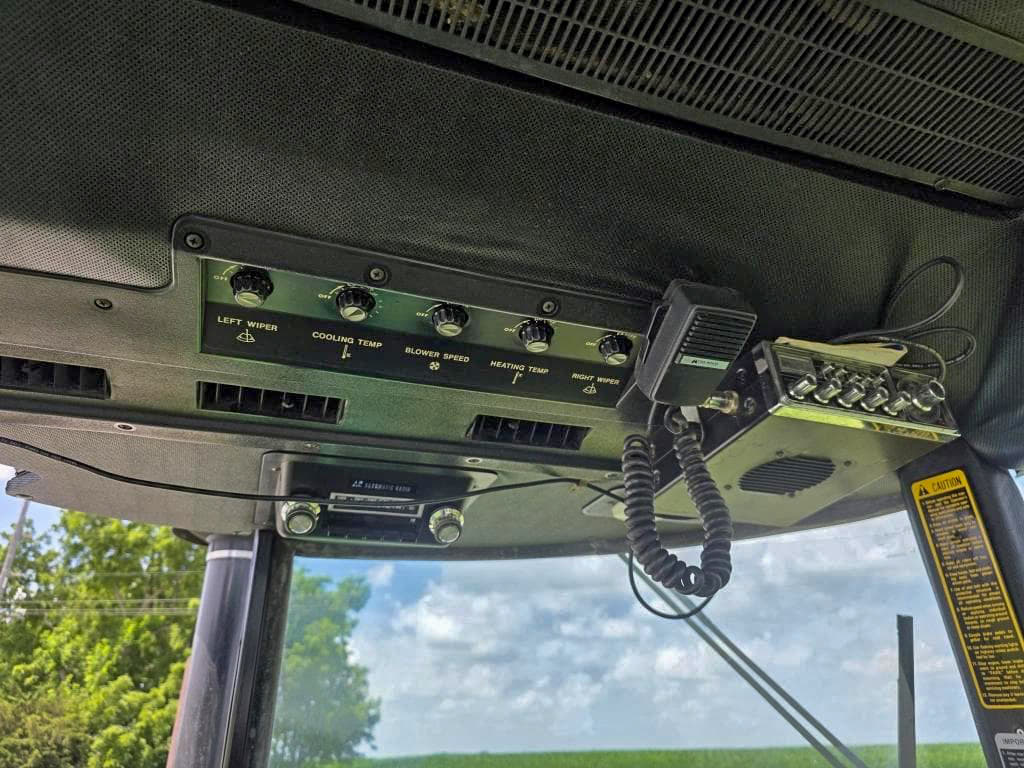
Kyle brought in a John Deere-certified service technician named Austin to inspect it. The tractor needed a radiator, new batteries, fresh fluids and fuel, one front tire, and some general attention. Once it received those items, it fired right up. When asked if it was a legit thousand-hour tractor, Austin said that in his opinion, it absolutely was. The air filters, cabin filters, and ether can are all date-correct, and I suspect that if we looked at the tire date codes, those would likely be from 1980 as well.
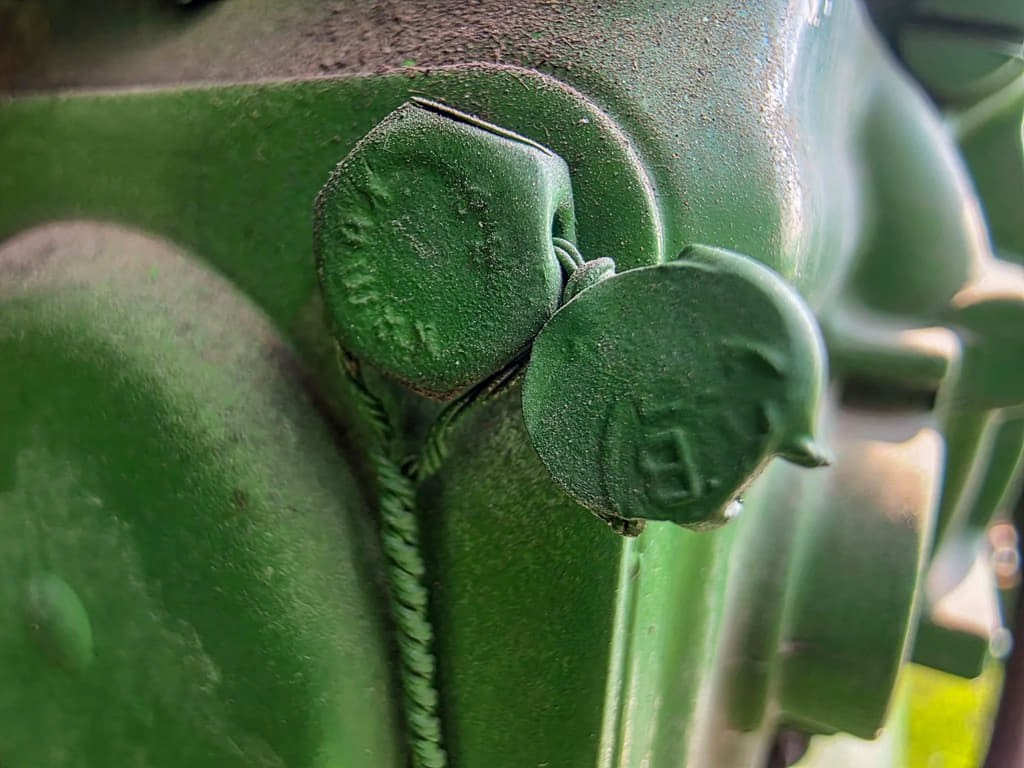
That doesn’t mean a buyer should treat it like a brand-new tractor. Long-term storage creates its own concerns. Seals age. Rubber deteriorates. The belts, hoses, and tires are all fairly weather-checked, as one would expect (and Austin didn’t replace any of them). However, collectors aren’t likely to look at this as an ordinary working 4440. They’re looking at its hours, originality, condition, and story.
It’s quite likely that this one won’t get much updating. Why? Because it’s only original one time, and from a collector’s standpoint, there’s something to be said for that. It could go into the field to work, but I wouldn’t be one bit surprised if it goes into a collection basically as-is.
Does it have the perfect combo of options?
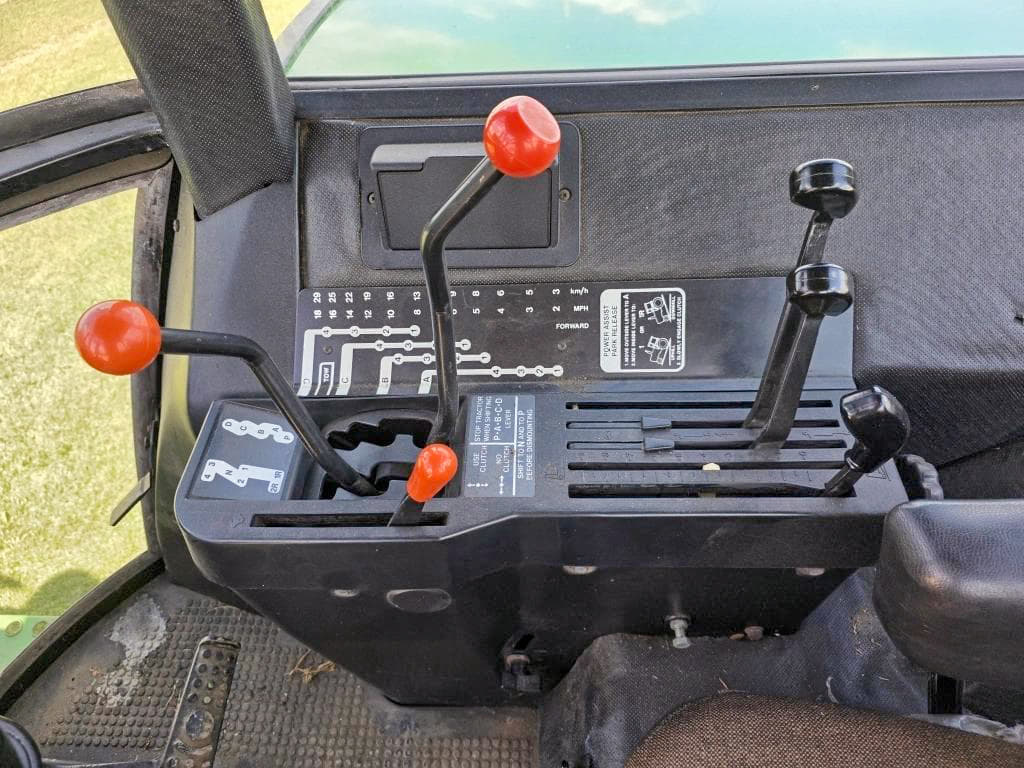
Not quite. If anything holds this tractor back, it may be the way it’s optioned. See, this is a relatively plain 4440. It’s a two-remote tractor with a Quad Range and short axles. It’s very much a garden variety tractor. Deere probably sold tens of thousands of them just like this.
However, even though Deere moved a ton of these, I believe most collectors prefer a Power Shift. Long axles and triple remotes would be nice, although that probably matters less than the transmission.
Had this been a long-axle Power Shift with 1,071 hours, the six-figure argument would get even easier. Still, at the end of the day, this tractor has a couple of things going for it that others don’t. The hours and availability. Even if it’s not the exact BTO-spec 4440 that collectors might be looking for, it’s still a thousand-hour tractor, and it’s available right now. In the instant-gratification world we live in, the availability thing might matter more than any of us really want to admit.
What Does the Record Tell Us?
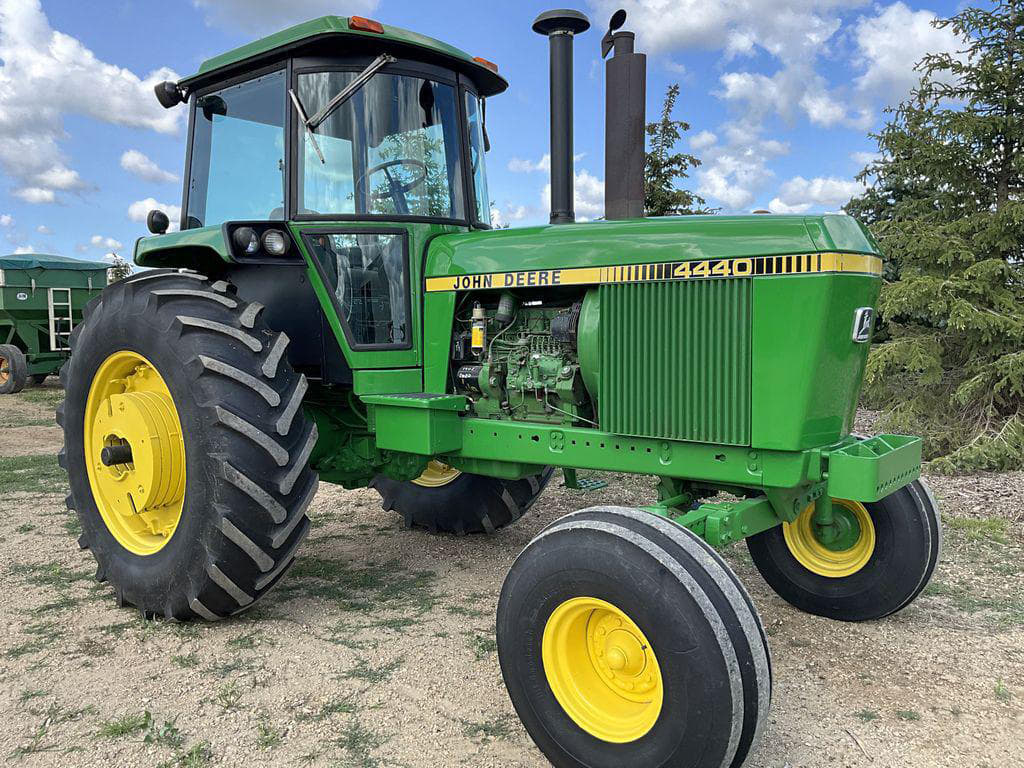
The current high-water mark for a John Deere 4440 is $85,000. A 1979 model showing 1,910 hours reached that number in December 2023. It was a two-owner Powershift tractor that presented really nicely, and sold on an estate auction. That wasn’t a random spike, either. During a 13-month timeframe between November 2022 and December 2023, we saw the record reset itself three different times.
The broader trend has been moving the same direction. Strong, low-hour 4440s keep getting more attention, and buyers continue paying for the best examples.
Now, none of that guarantees Kyle’s tractor will bring $100,000. Auction records don’t work like mathematical formulas; they’re subject to things like grain markets and weather, and whether or not a few bidders turn it into a checkbook-measuring contest. Still, the data doesn’t lie. Generally speaking, nice, clean 4440s are on the way up.
Low-hour 4440s have already crossed $70,000 and $80,000. Kyle’s tractor shows nearly 850 fewer hours than the current record holder. It also has original paint and a compelling family history.
That puts six figures within the realm of possibility.
It’s Still a 4440
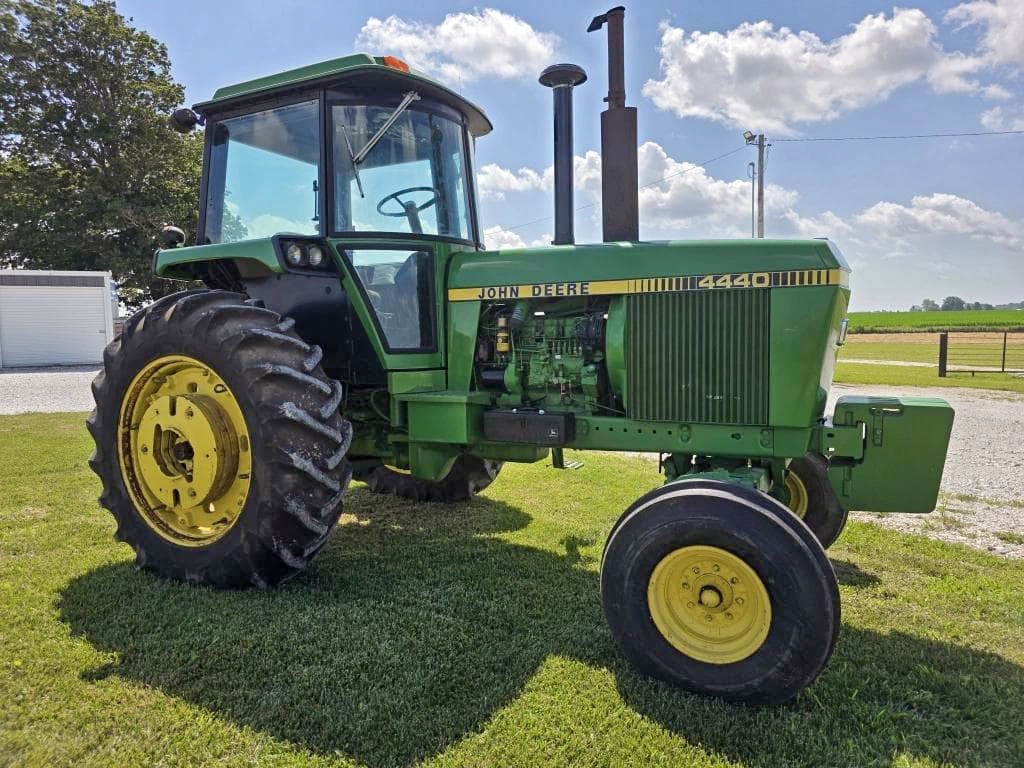
The strongest argument against a $100,000 result is also the simplest. At the end of the day, it’s still a 4440. Deere built plenty of them. They aren’t rare in the traditional sense, and you can still find workable examples without selling a kidney. However, collector value has never depended entirely on production numbers. It depends on condition, provenance, originality, configuration, and timing. Most of all, it depends on whether two people want the same tractor badly enough.
This tractor isn’t valuable because no other 4440s exist. It’s valuable because very few exist like this one.
Maybe it falls short of the record. Maybe the Quad Range and short axles keep the serious collectors from stretching. Or maybe several well-funded buyers have spent years waiting for a 4440 with super-low hours and they’ll do what it takes to get it. We’ll find out in Adair on August 15.
Regardless of the final number, though, the larger point remains.
The collector market has moved forward. The tractors that once replaced two-cylinders and New Generation Deeres are becoming collectibles themselves. Their buyers now have memories, disposable income, and a pretty clear idea of what they want.
You don’t have to like the prices. You don’t have to understand paying collector money for a tractor that still feeds cattle every morning.
Still, the market has spoken.
The John Deere 4440 is a collector tractor now.
Here’s the link if you want to take a look at the photos. It’s a neat little time capsule!


