Minneapolis-Moline UDLX listings on Tractor Zoom
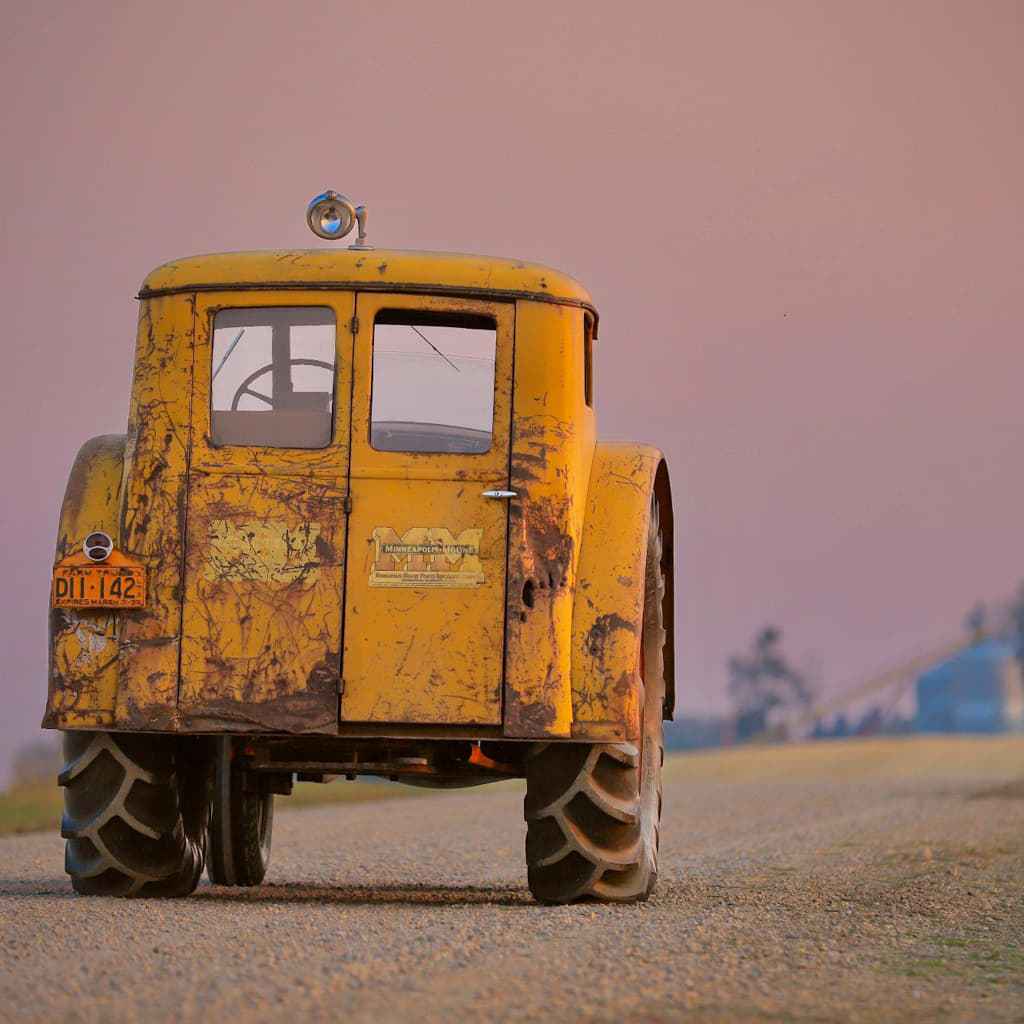
If you ever wanted a single machine that explains both the brilliance and the blind spots of 1930s farm-equipment marketing, the Minneapolis-Moline UDLX “Comfortractor” is sitting right there in Prairie Gold, practically waving at you.
The UDLX wasn’t built because Minneapolis-Moline suddenly forgot how farmers bought tractors. It was built because the company was trying to solve a very real set of problems—comfort, roadability, and the idea of “one machine does it all”—at about the worst possible time to ask farmers to pay extra for anything.
What drove the UDLX into existence
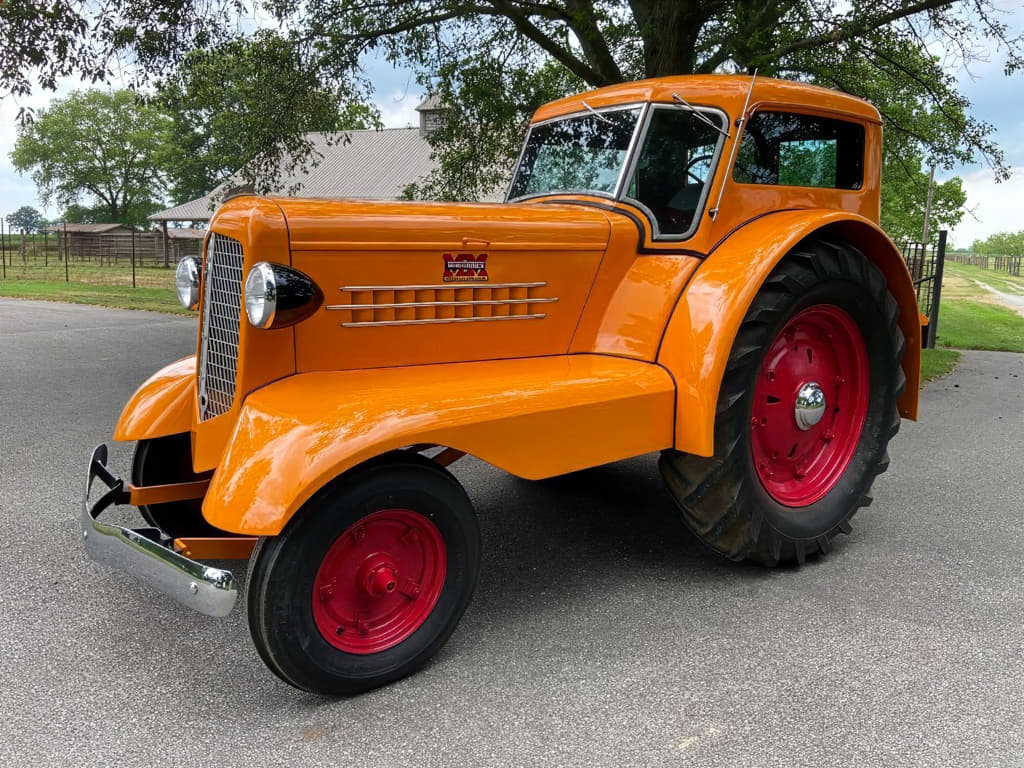
Farmers were asking for comfort—at least on paper
By the mid-1930s, Minneapolis-Moline’s planning people were hearing the same complaint everyone else was: tractors were productive, but they were miserable places to spend a day. Dust, wind, rain, cold, heat…you earned every acre. So they started asking what farmers really wanted.
And the farmers answered. Loud and clear. Overwhelmingly, they wanted a machine with an integrated cab—and they wanted something that would help them get products to market faster.
That part matters, because the UDLX wasn’t some backyard one-off. It was a serious attempt to answer a customer request with a real, production machine.
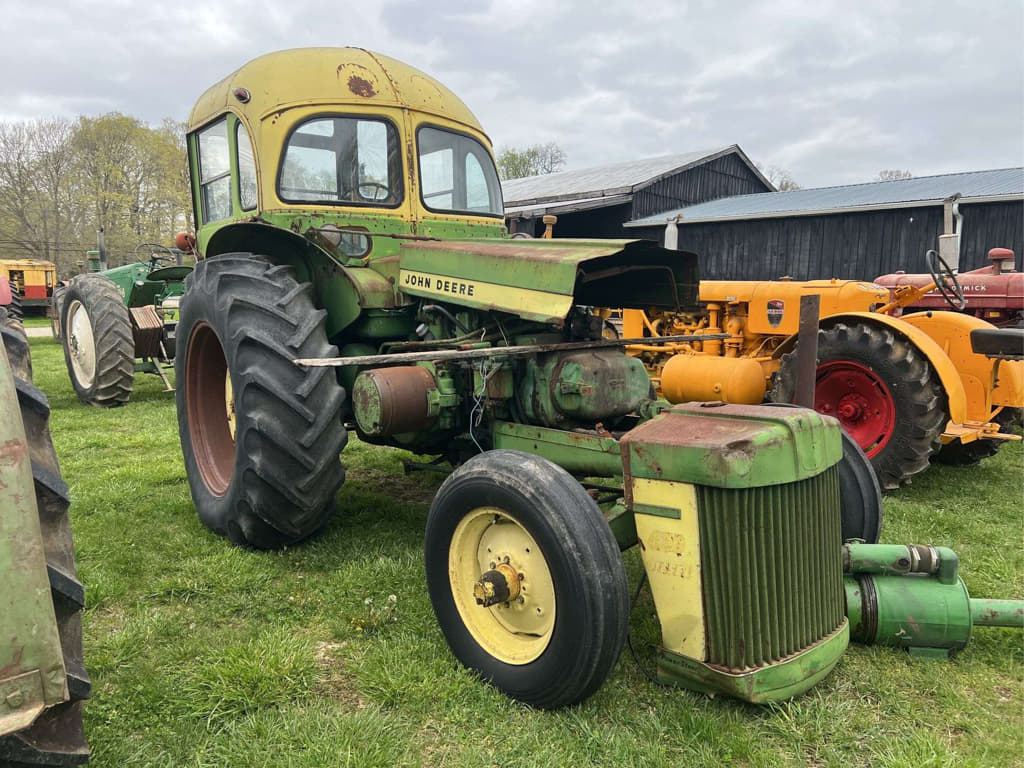
The “tractor + car” idea wasn’t as goofy as it sounds
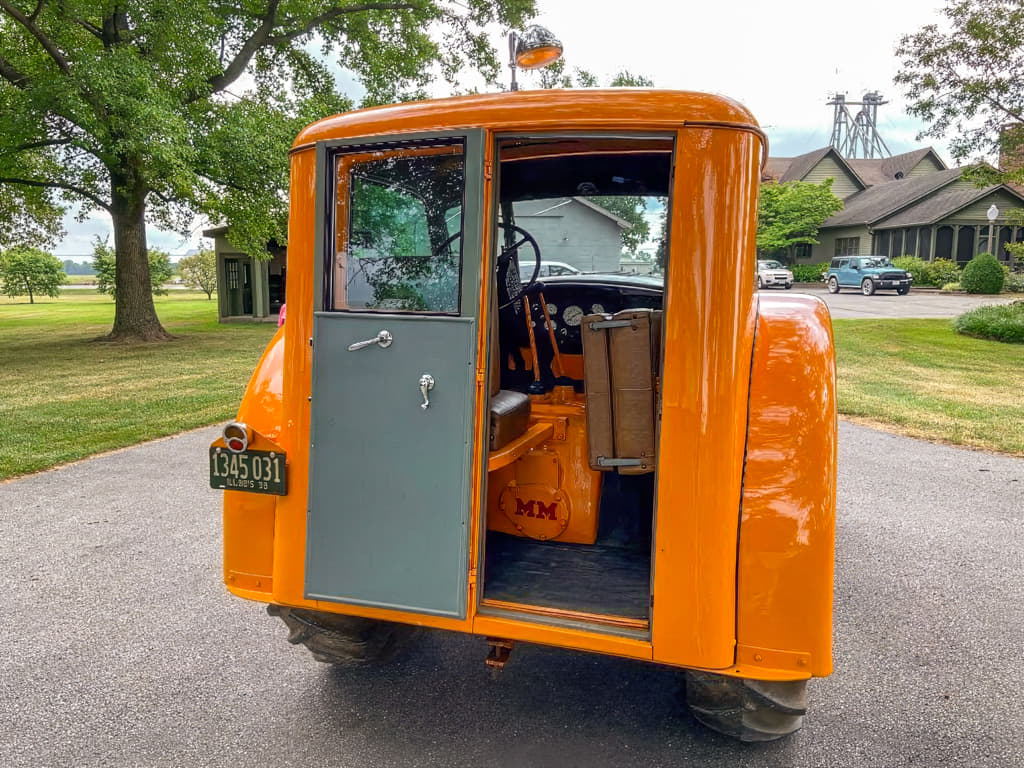
Minneapolis-Moline didn’t stop at “add a cab.” They took a bigger swing: what if the tractor could also be the family’s run-to-town vehicle? They already knew farmers wanted protection from the elements, so why not go one step further and build a tractor that could pull double-duty as an automobile?
That sounds silly now, but in context it was a very 1930s American idea. Cars were getting smoother, more enclosed, more comfortable, and more “styled.” Streamlining was everywhere—from trains to toasters. So Minneapolis-Moline basically asked: why should tractors look—and feel—like dinosaurs on wheels when your Ford sedan looks like the future?
The need for speed…
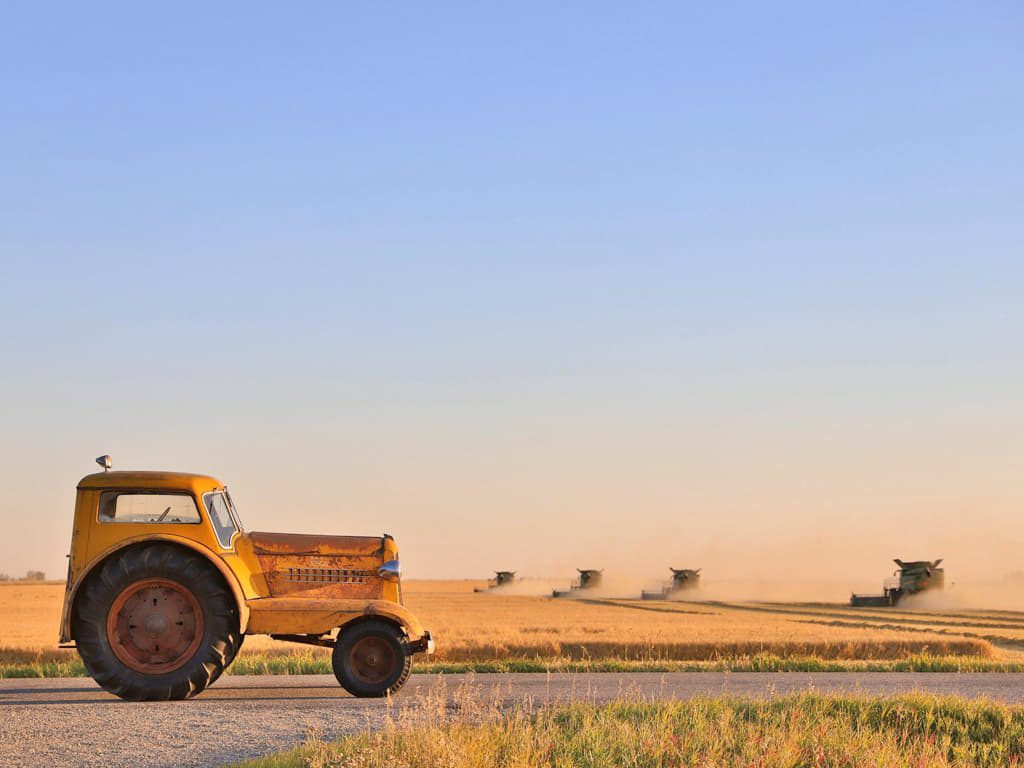
Another driver was mobility. The UDLX was geared to move. Its five-speed transmission with tall gearing made getting from one field to another—or from the farm to town—pretty darn quick. And that “go fast on the road” angle mattered more than we sometimes remember. By the late ’30s, saving travel time was becoming a real selling point, because it meant getting things from the farm to the market faster.
I can’t help but think about my own family with something like that—being able to get apples to market quicker would’ve been a pretty compelling argument.
It was also a rolling style show
Minneapolis-Moline didn’t just launch the UDLX—they turned it into an event. At the Minneapolis-Moline National Harvest Festival and “Style Show” in September of 1938, they showed off multiple Comfortractors to a crowd said to be about 12,000 people.
That tells you exactly how Moline saw this tractor: a flagship. A halo machine. Something that said, “We’re modern, we’re bold, and we’re listening to farmers.”
And all of that was true. It just flopped in truly spectacular fashion.
So why did it flop so hard?
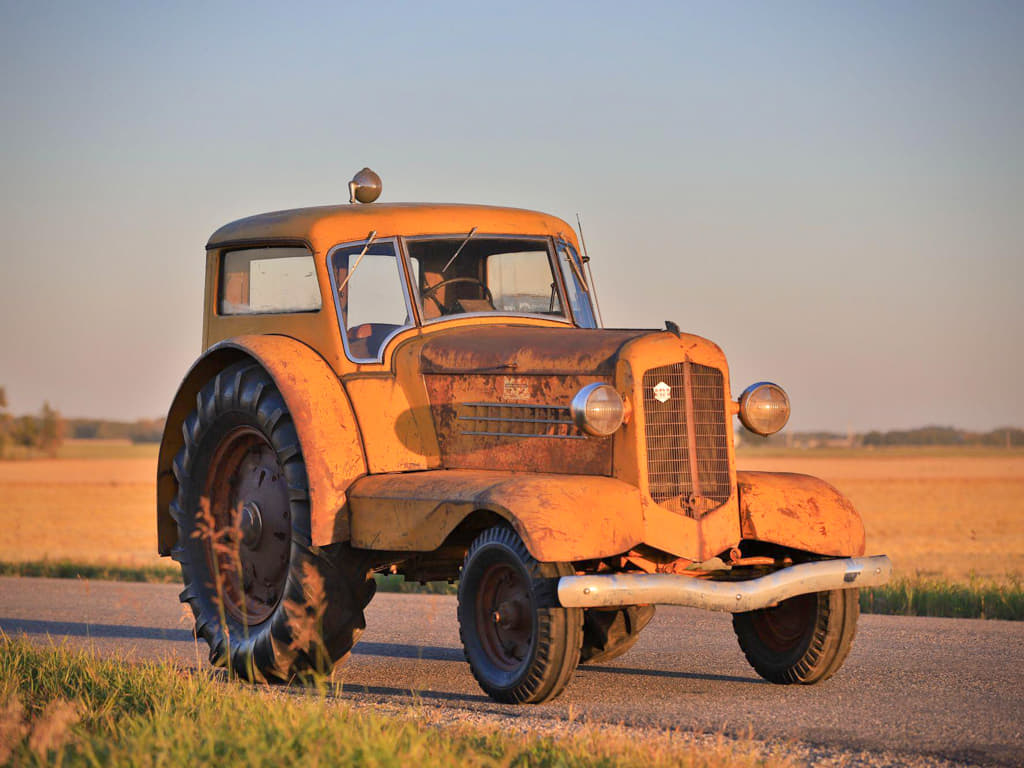
Let’s be honest: there are tractor ideas that fail because the engineering misses. The UDLX failed mostly because the market missed—then the product details piled on.
Price: the UDLX asked Depression-era farmers to buy a luxury item
The number you see over and over is right around $2,000—and for the time, that was a bridge too far. You can call the sales results what they were: a miserable failure. Even though farmers said they wanted this idea, most of them just couldn’t swing that kind of money for a tractor.
The math is pretty simple. Around the same time, about $1,000 would buy you nearly any tractor on the market, and a 1938 Ford Tudor could be had for around $725. You could buy both and still come out ahead versus a UDLX—and the Ford would carry more people and more stuff, more comfortably.
That’s the ballgame. The UDLX was trying to sell “one machine replaces two,” but the math didn’t land. And coming out of the Great Depression, farmers were very, very good at math.
Timing: The “Roosevelt Depression”
Even if you ignore the broader Great Depression, the UDLX still managed to launch at about the worst possible moment—right into the 1937–38 recession. The Roosevelt administration tightened fiscal policy in an attempt to balance the budget and doubled bank reserve requirements to rein in inflation. The result was predictable: the money supply tightened, credit got harder to find, and the whole economy felt it for a year or two.
That matters because tractors are classic “durable goods.” When confidence drops and commodity prices fall out the bottom, purchases like that take a back-burner. And in the case of the UDLX, a premium-priced, style-forward tractor–car hybrid is exactly the kind of thing that doesn’t just get postponed—it gets postponed forever.
The social factor: “comfort” could read as “soft”
This sounds petty (and honestly, it kind of is) until you remember how farm culture works: in the late Depression years, conspicuous comfort could be frowned upon. Riding around in an enclosed, upholstered cab while your neighbor was eating wind and dust could look like showing off—or worse, like you were getting soft. You still see echoes of that today in little ways—like the unspoken rule about who turns the headlights on first in the evening.
That wasn’t the only reason the UDLX failed, but it helps explain why it never became aspirational in its own time. It didn’t read as “the future.” It read more like, “who do you think you are?”
Jack of all trades…master of none
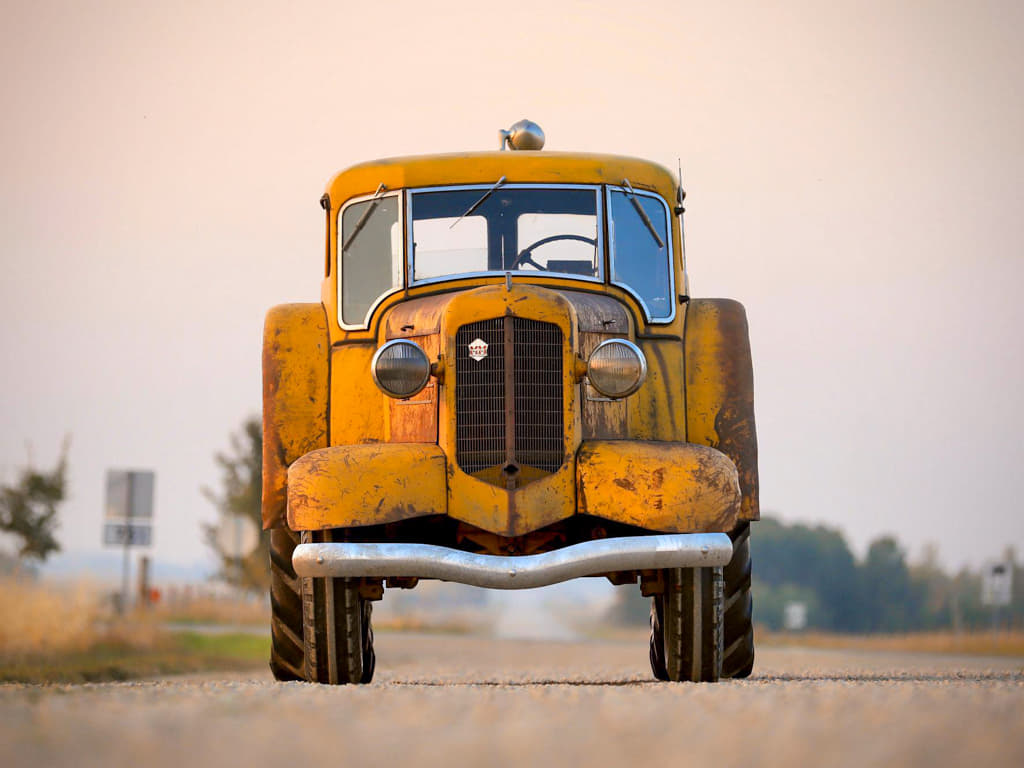
Here’s where the UDLX gets really interesting. It didn’t just lose on price—it also asked buyers to swallow some very real compromises, especially on the road. Minneapolis-Moline had a bold idea, but the execution just wasn’t there.
The Comfortractor had no front or rear suspension. None. On country roads, it rode like a dentist’s chair—every bump trying to rattle your fillings loose. The cab didn’t help, either. With the drivetrain sitting right under you, space was at a premium. Unless you were fairly short, climbing in was an exercise in back-pain management, and unless your passenger was built like a yoga instructor, two adults sharing that space was awkward at best. It was less a cab and more a mechanical phone booth.
Then there was the weight. At close to 6,400 pounds, it had enough power to get moving—but not a very convincing way to get stopped. Rear drum brakes only, and most accounts suggest they were…optimistic at anything resembling road speed.
In other words: as a tractor, it was complicated and expensive. As a car, it was loud, bouncy, and still very much a tractor.
Production reality: they built them, then had to unwind the idea
Even today, production numbers get reported a little differently depending on the source. Some say that it was 125, some say that it was 150. But the most telling detail really isn’t the number—it’s what happened when they didn’t sell. Minneapolis-Moline built their first batch, couldn’t sell ’em, and recalled the unsold inventory. They then stripped the cabs and body panels, and sent them back out to dealers to sell as a regular ol’ Model U.
That’s the definition of a commercial failure: the factory literally backs the product out of existence. Sad but true.
The irony that makes the UDLX matter
The UDLX failed because it tried to sell tomorrow to people who were still paying for yesterday. But the core idea—an enclosed cab, better ergonomics, real weather protection, and something like all-day comfort—was absolutely right. It’d be unfair to call it a total failure just because it bombed at the dealership; in reality, it pushed the “cab tractor” idea a good three decades before cabs became normal equipment.
So yeah, the UDLX was a beautiful disaster in its own time. But it also proved farmers weren’t wrong to want comfort—they just weren’t willing, or able, to pay luxury-car money for it in 1938, in the middle of a recession, while trying not to look like they were getting soft.
And that’s why the UDLX is more than a quirky collectible. It’s a case study in timing. When you’re early, you don’t just need a good idea. You need the market to be ready and the price to make sense.
The UDLX got one of those right: the idea.
The rest is what sank it.
Now, with that said, let’s talk about collectability—because the last decade or so has been very kind to these machines.
UDLXs are cooler than ever…

For years, the few surviving UDLXs just sat in dusty corners of barns. Nobody really did much with them. They were that one weird tractor Grandpa took a flyer on—and then probably blamed for a dentist bill.
These days, though, a lot of collectors see the UDLX as a Holy Grail of tractor collecting, and some of them are willing to pay dearly for one. The peak was about ten years ago, when Mecum sold one at a Gone Farmin’ auction for right around $200,000. Values have cooled a bit since then, but nicely restored examples still bring $130,000 or better on the regular. And when an original surfaces—like the one you’ve seen pictured throughout most of the top half of this article—they do just fine too. That Canadian tractor sold for $120,000 in the spring of 2023.
Bottom line: there’s still a very healthy market for these things. Which is good—because there are two more coming out of a barn in Florida that we probably ought to talk about.
The ones selling in Florida next week…
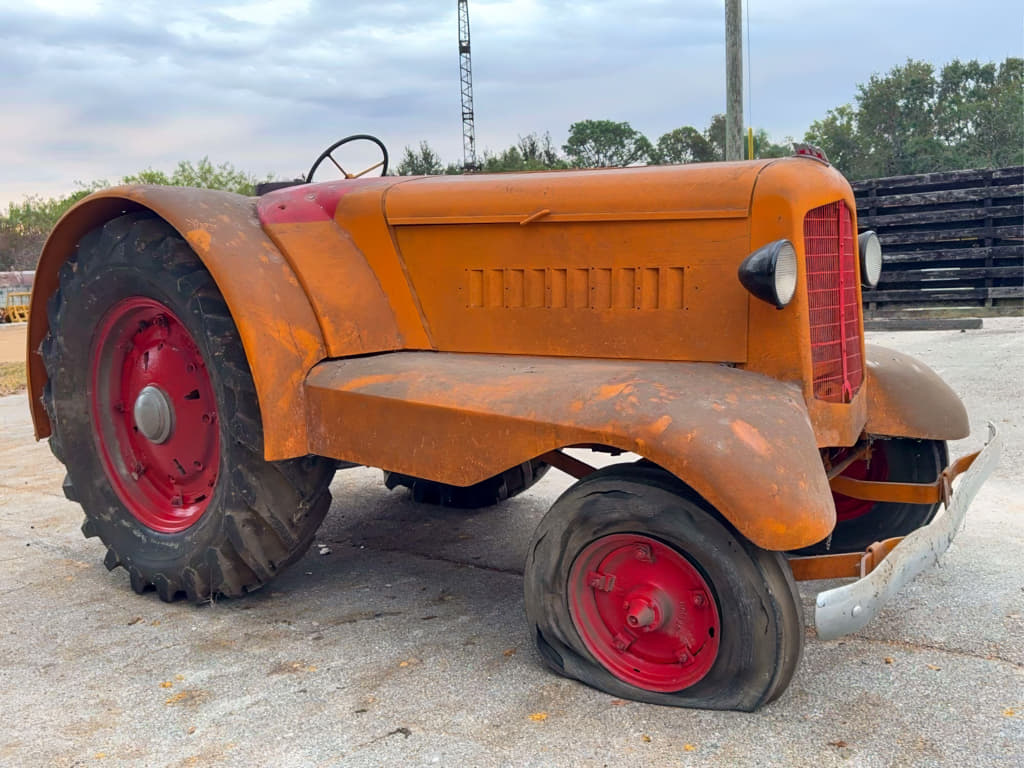
Bill Newman started using Minneapolis-Moline equipment in his contracting business sometime around 1960, and he fell hard for it. It didn’t take long before “using” turned into “collecting.” Before long, he had more than a hundred Molines, and he was well on his way to owning one of every model the company ever built. As far as I know, Bill’s collection was—and may still be—the largest gathering of Minnie-Mos in the state of Florida.
He didn’t just own them, either. He loved them. I never had the chance to meet Bill before he passed, but I did see an interview with him once, and it told me just about everything I needed to know. When he was asked why he liked Molines so much, he just smiled and said, “Well, they’re the best tractor that ever was, the best tractor that ever is, and ever will be…”
And that was that. Case closed.
From the way he talked, you could tell he was one of those fun-loving guys with a little Southern drawl and a touch of a dry sense of humor. The kind of guy who didn’t need a spreadsheet to justify his favorites—he’d already made up his mind, and he was perfectly happy to tell you why.
The UDLXs
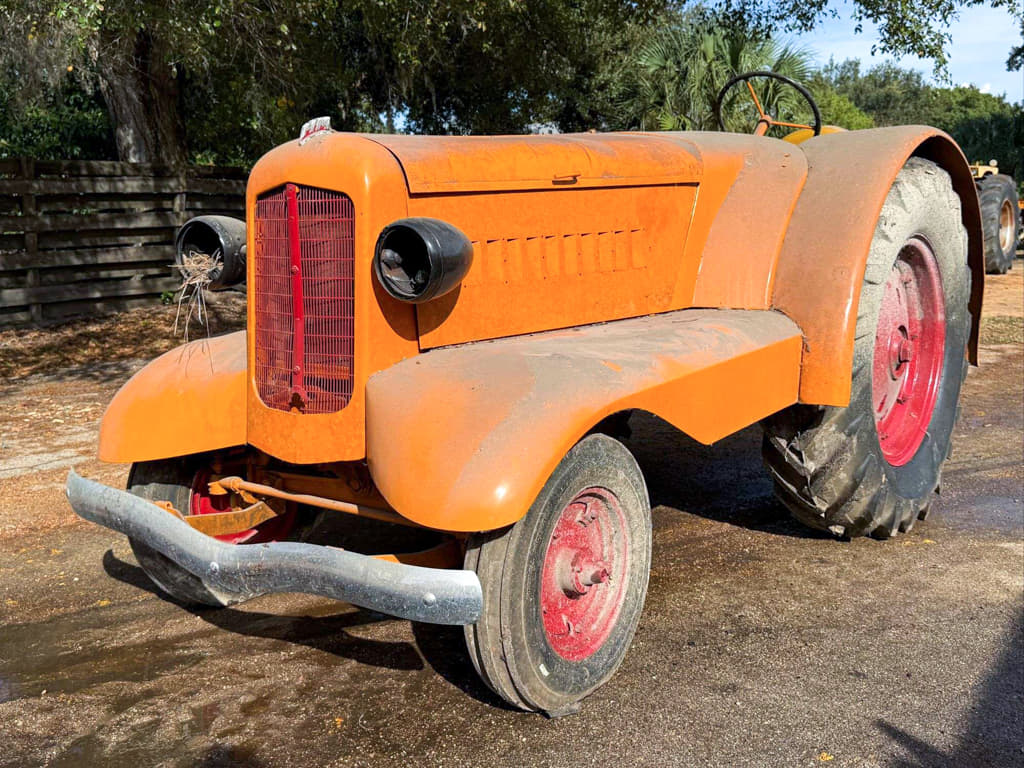
Bill always meant to restore both of his UDLXs. And from some old video footage of his collection, you can tell he’d at least gotten partway there—both tractors still wear their UDLX-specific sheet metal, so some real progress had been made. But, as so often happens, time gets away from us. Bill passed away in December of 2024.
In broad terms, most of what you’d need to restore these tractors is still there, aside from the cabs themselves. The engines are free, the transmissions are present (though untested), and the big pieces are accounted for. What’s missing is a lot of the small stuff—radiator caps, gauge panels, wheel caps, that sort of thing. Some of that can probably be found with enough patience. The real challenge is the cabs. Most originals were scrapped, either at the factory or during World War II, and as far as I know, nobody is building truly factory-correct reproductions.
So it’s a bit of a mixed bag. Restoring either one wouldn’t be impossible—but doing it right, and doing it factory-correct, could take some real expertise.
What will they bring?
Honestly, your guess is as good as mine. Complete, running UDLXs almost always bring north of $100,000—but these aren’t complete, and they don’t run. There is a cab in the auction, though it needs structural repairs and doors, and I’m not sure if it originally belongs to either tractor. Still, once it’s sorted out, it could at least serve as a pattern for building a new one.
That probably narrows the buyer pool a bit. Even so, I’d expect plenty of interest. As I mentioned earlier, the UDLX is still a Holy Grail tractor for a lot of collectors. It’ll be fun to see where the dust settles when the hammer falls next week.
Here’s the link to the collection on Tractor Zoom—there’s a lot of neat stuff in this auction.