

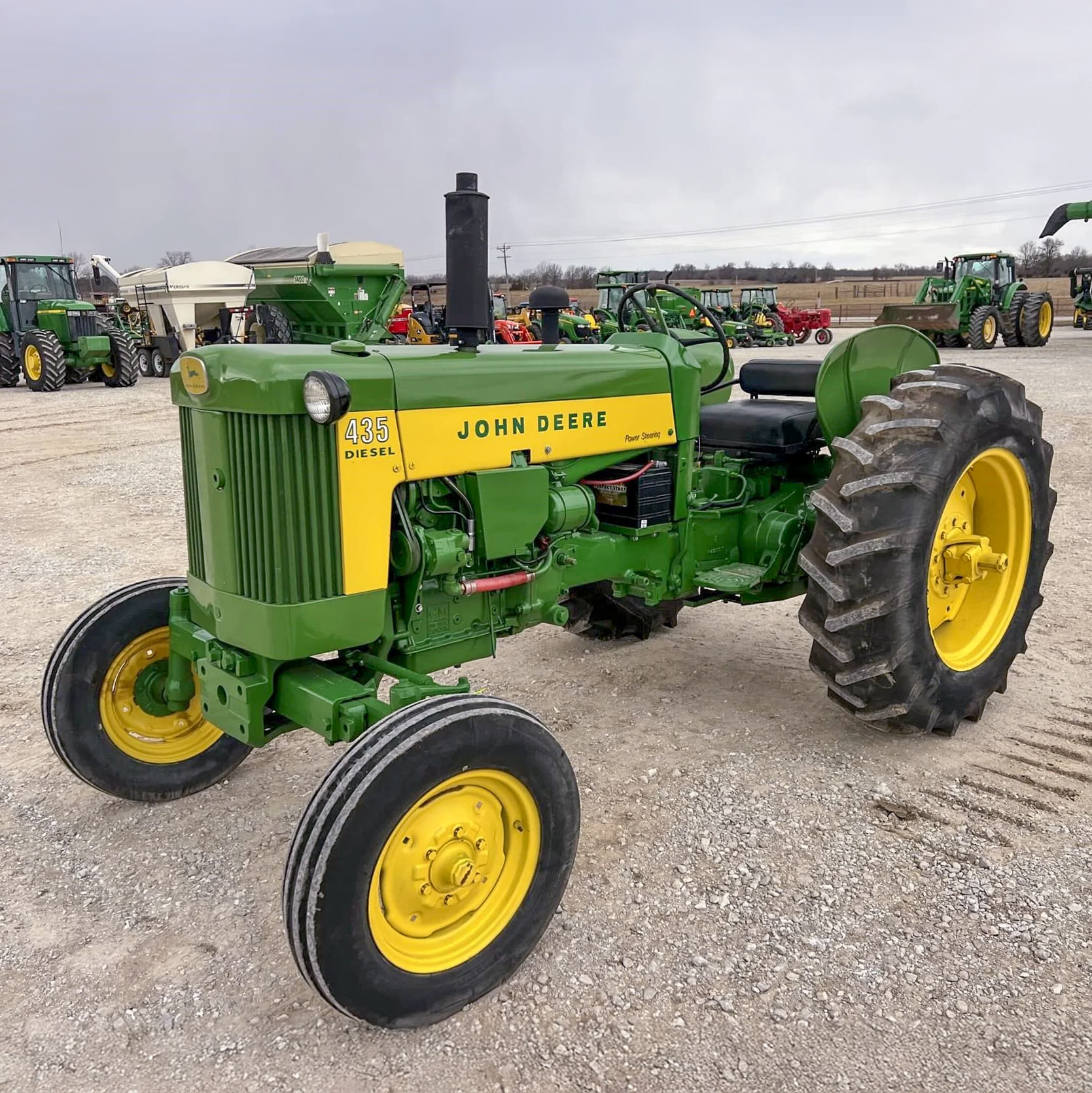
John Deere 435 listings on Tractor Zoom
Before we talk about the John Deere 435 in the photo above, let me set the stage for you — because this tractor really only makes sense when you understand what was happening inside Deere at the time.
The Big Gamble
By 1959, John Deere was deep into what would become the biggest gamble in company history: the New Generation tractors. Development had started back in the early 1950s, and by the end of the decade it was consuming nearly every engineering resource Deere had. These weren’t just incremental updates. They were radical departures from everything they had ever built. Two cylinders were on the chopping block, operator ergonomics were being rethought, and nearly every major system — engine, drivetrain, hydraulics, electrical — was being redesigned from the ground up.
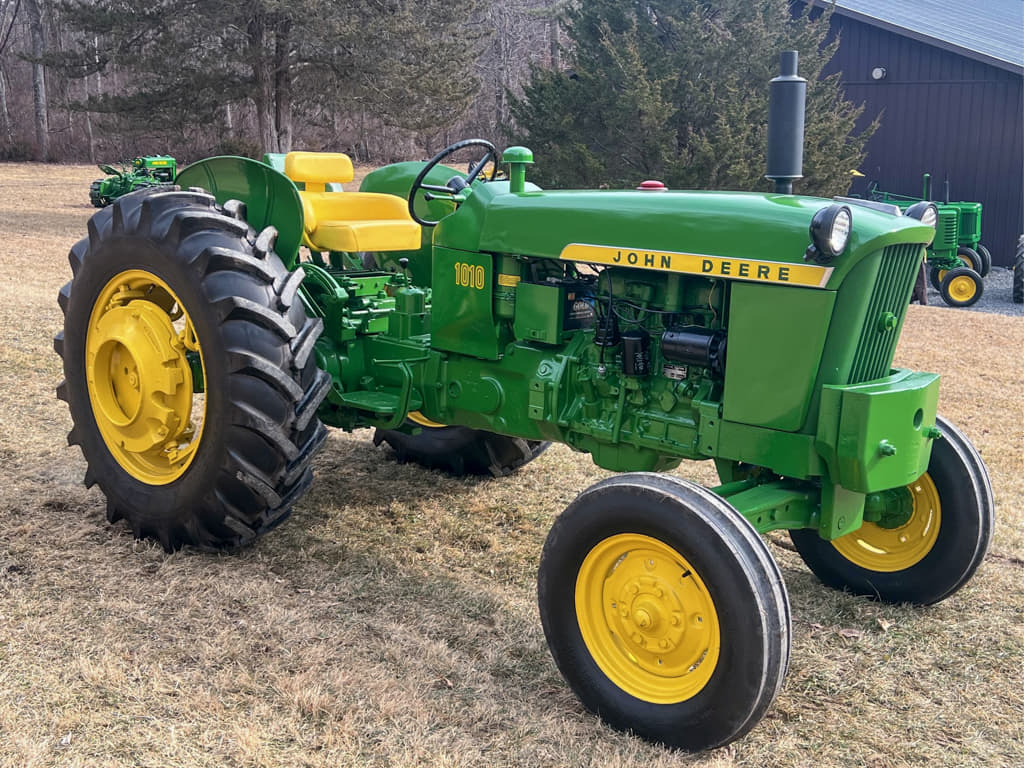
It was an all-hands-on-deck effort, and Deere knew it. The problem was, farmers still needed tractors right now. Deere couldn’t simply stop selling equipment while they waited for the New Generation machines to be ready. On top of that, there was still strong demand for improvements in the existing two-cylinder lineup, especially at the smaller end of the horsepower spectrum.
That’s where the John Deere 430 comes into play.
Buying time…
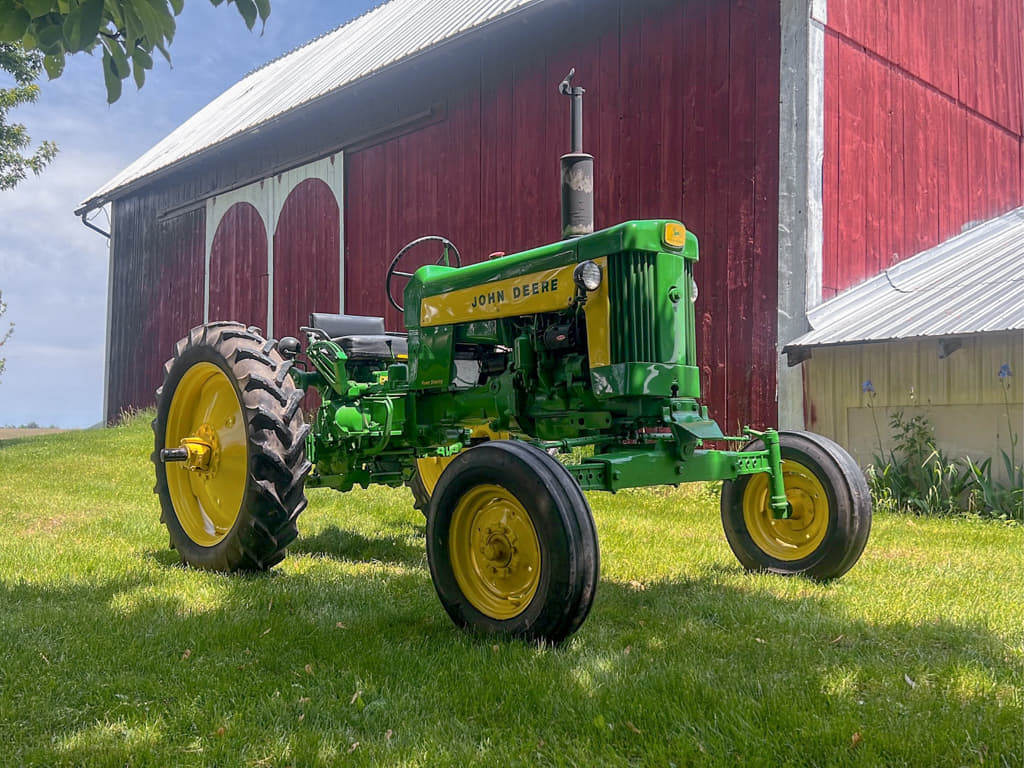
For the 1959 model year, Deere needed to buy itself some development time. The solution was to “redesign” the 430 (which was a gas/LP-only tractor) just enough to keep it marketable without pulling engineers away from New Generation work. They reworked a few things on the tractor, but the biggest change was the powerplant. Deere wanted to offer a small diesel option — something the 430 had never had — but they simply didn’t have the bandwidth to develop a new two-cylinder diesel engine as a stopgap.
So they got creative.
Instead of designing their own engine, Deere picked up the phone and called GM in Detroit. The result was a deal to use General Motors’ supercharged, two-stroke 2-53 Detroit Diesel engine. With that decision, Deere suddenly had a “new” tractor — the John Deere 435 — and one that could legitimately claim diesel power. Two birds, one stone. As a sidenote, I’m fairly sure this is the first time John Deere outsourced an engine for a production model.
From a practical standpoint, the Detroit 2-53 made sense. It was compact, reliable, and already proven in industrial and off-road applications. It produced somewhere in the neighborhood of 33 horsepower at the PTO, which put it right where Deere needed it in the lineup. On paper, it checked all the boxes.
In practice? Well…it came with some personality.
Turning fuel into noise…
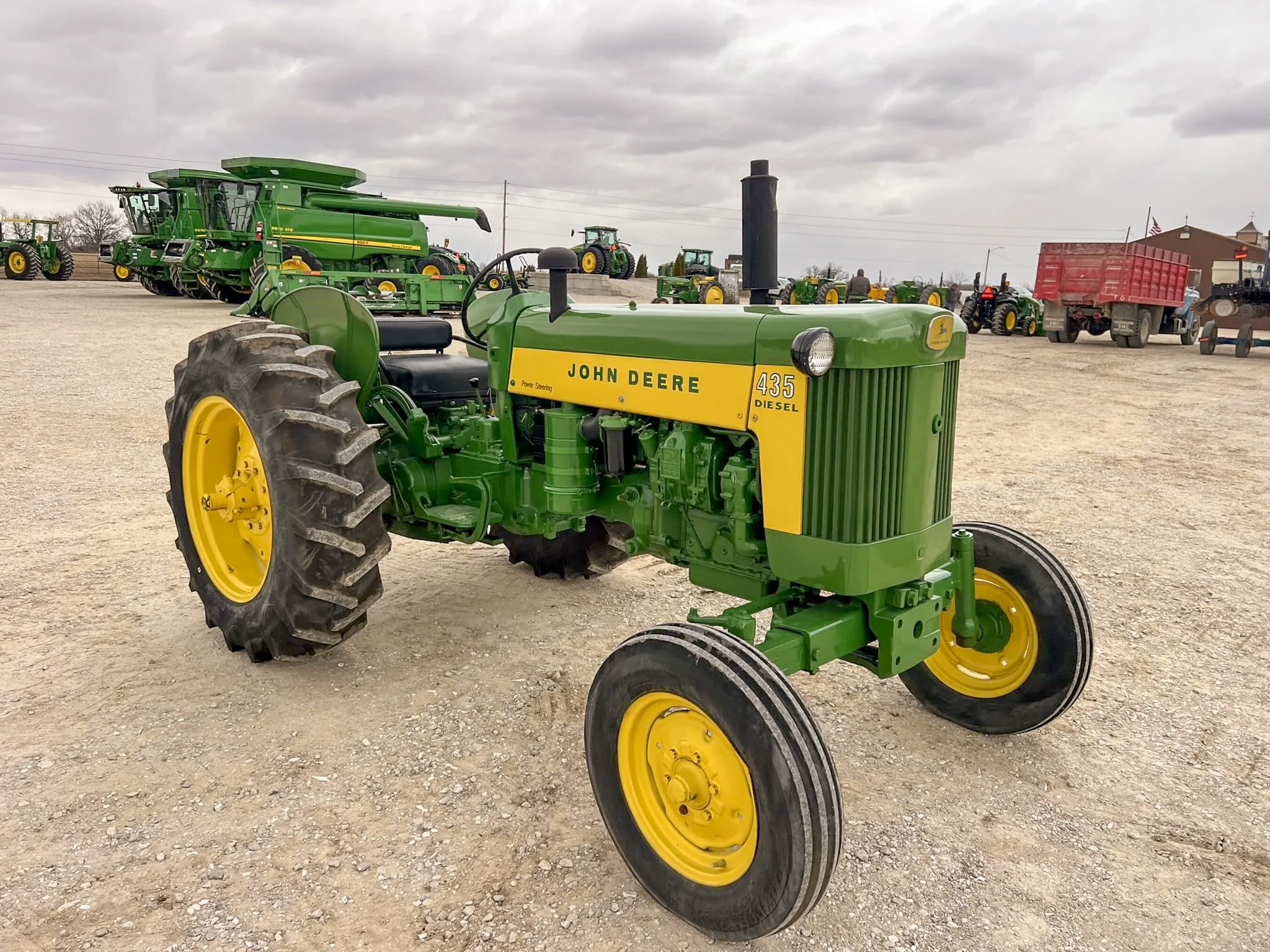
Detroit two-strokes are legendary for a reason. They’re tough, relatively dependable little engines — but they are also loud. Incredibly loud. Anyone who’s ever been around a screaming two-stroke Detroit at full song knows exactly what I’m talking about. The sound isn’t just noise; it’s an experience that rattles your teeth and announces your presence to everyone within earshot. I still think they’re cool, but my goodness they are an assault on the ears. If I ever meet the buyer of this one in the photos, I’ll probably hand them a fresh set of earplugs and a big bottle of Excedrin — just as a courtesy.
The John Deere 435 is one of those footnote-in-history machines that perfectly captures a moment in time. It wasn’t meant to be a long-term solution; Deere knocked out the entire run of 4,626 tractors inside of 11 months; the first one rolled off the line on March 31, 1959 and the last on February 29, 1960. It was a bridge — a clever, slightly unconventional answer to a very real problem. Deere needed time, farmers wanted small diesel tractors, and the 435 filled that gap just long enough for the New Generation era to arrive and change everything.
That’s what makes it such an interesting piece of iron today.
So what about this one in the photos?
Glad you asked.
The one you can buy this weekend…
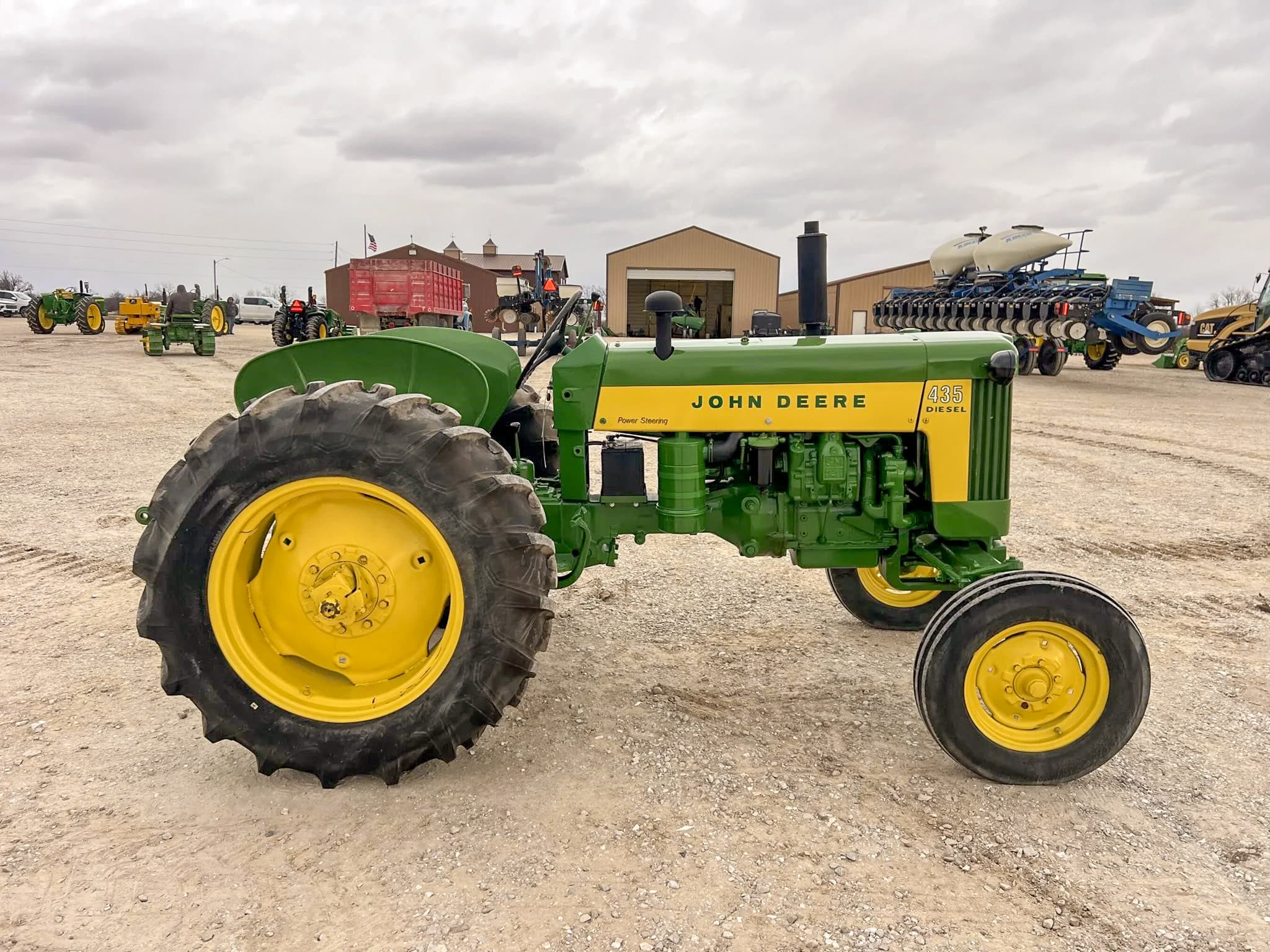
This tractor comes out of a tidy little collection in southern Michigan and is headed to what I believe is Wheeler Auctions’ biggest sale of the year — their January consignment auction. The lineup for that sale is absolutely massive. Even with three rings running at the same time, I honestly don’t know how they manage to get it all sold in a single day.
I don’t have a ton of background on this particular tractor, but I did have a quick conversation with one of the guys on Wheeler’s team recently. He told me it came out of a pretty Deere-centric collection and that it’s a nice example that runs and drives well.
It’s also a very late-production tractor — 219 units from the end of the run, to be exact. If I had to guess, it was probably built sometime in mid-February of 1960.
Clean & Straight…
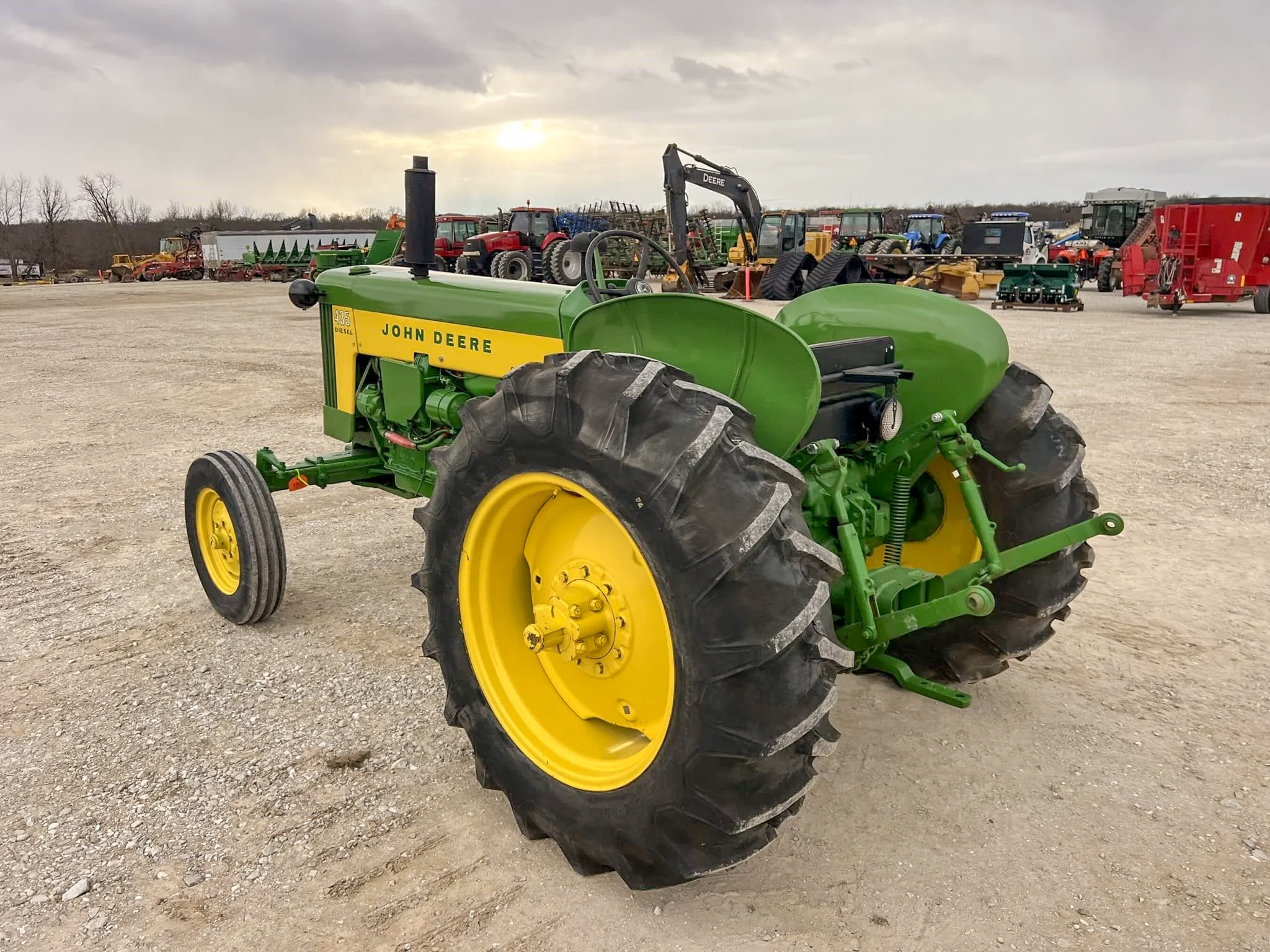
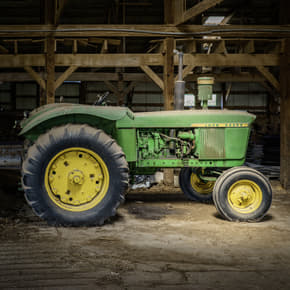
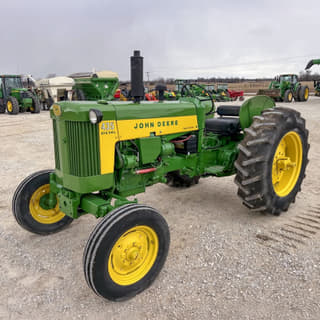
Looking through the photos, the first thing that jumps out at me is how straight the sheet metal is — especially the cast aluminum nosepiece. That’s getting harder and harder to find on these. It looks like it’s been repainted fairly recently, and I’d assume it’s a two-stage automotive paint. It presents very well overall and has a clean, honest look to it.
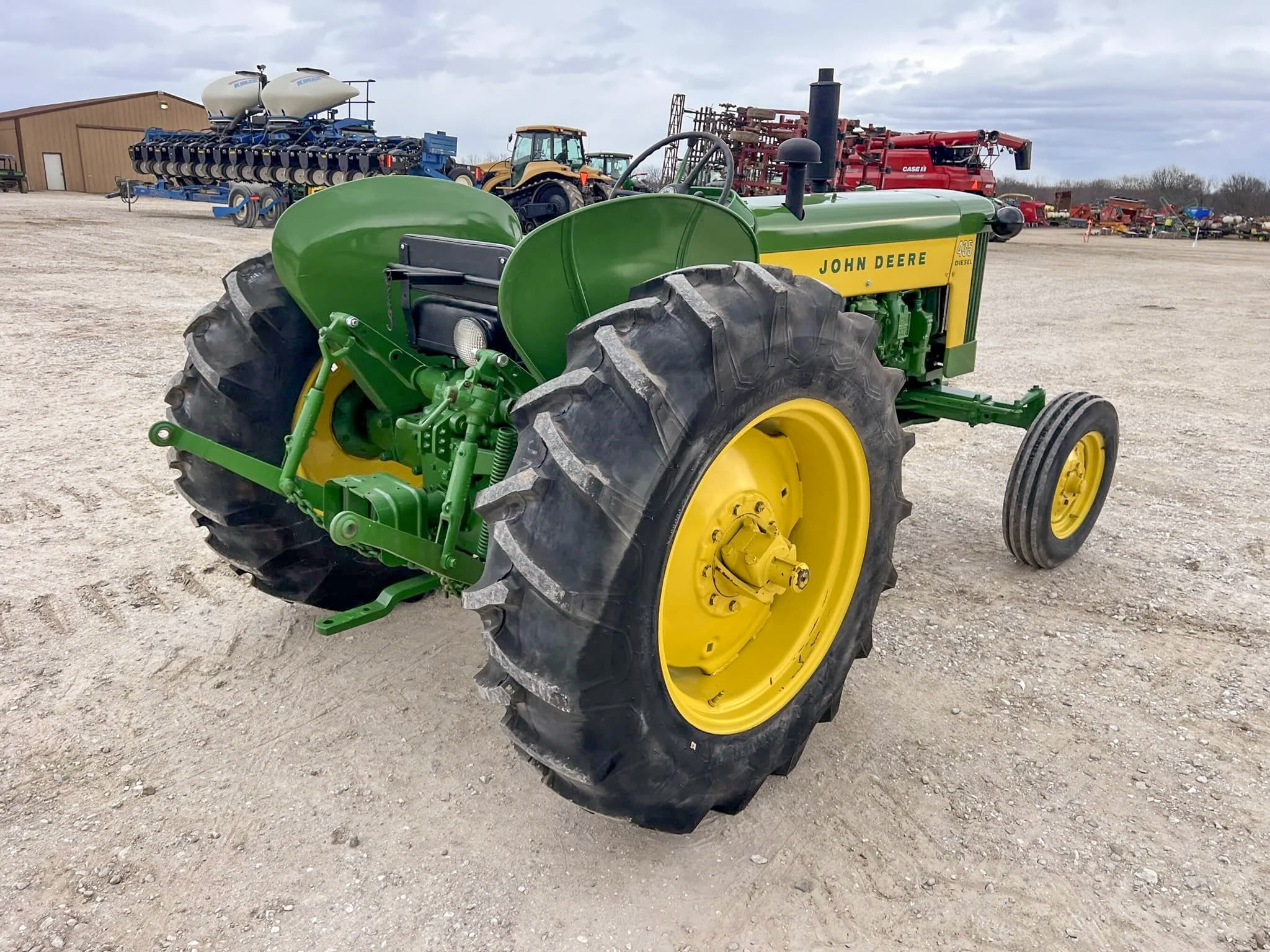
It’s sitting on fresh Firestones all the way around, with 13.6-28s on the rear and 600-16s up front. This one’s equipped with a five-speed transmission and a 540 RPM PTO, which is a pretty common and very usable configuration for a 435. It does have a three-point on it as well.
The 435 wasn’t a tractor with a long list of available options. No narrow fronts, no high-crops — just a straightforward, diesel-powered utility tractor. That said, there is one option box that was checked on this one that most didn’t get: power steering. Based on what I’ve been able to find, only 619 of these tractors were built with it, which definitely makes this one a little more interesting.
Overall, it’s a nice little example of a John Deere 435 and really just needs someone to go out and enjoy it. It probably wouldn’t be a great choice for a long tractor ride — it tops out at a blistering 13.5 MPH — but it’d be perfect for puttering around the place or giving the kids or grandkids a ride around the pasture. And because it’s got a deluxe muffler on it, theoretically it’d be a little easier on the ears too!
What’ll it bring?
Based on a quick look through the Tractor Zoom Pro database, these little tractors tend to price themselves a bit higher than most small two-cylinders these days. Over the past year or two, it looks like the entry point for a nicer restored example — or a really solid original — is creeping up toward the $10,000 mark. Sure, there are probably still a few honest originals out there that run and drive and could be bought for less, but a lot of these have been restored to one degree or another, and that absolutely shows up in the prices.
Given what we’ve seen recently, I wouldn’t be surprised if this one flirts with $10,000. It’s the nicest 435 we’ve seen cross the auction block in a while, and it’s selling on an auction that typically draws plenty of eyeballs.
Either way, it’s a neat little tractor with an interesting place in Deere’s history, and it’ll be fun to watch where the hammer finally falls.