


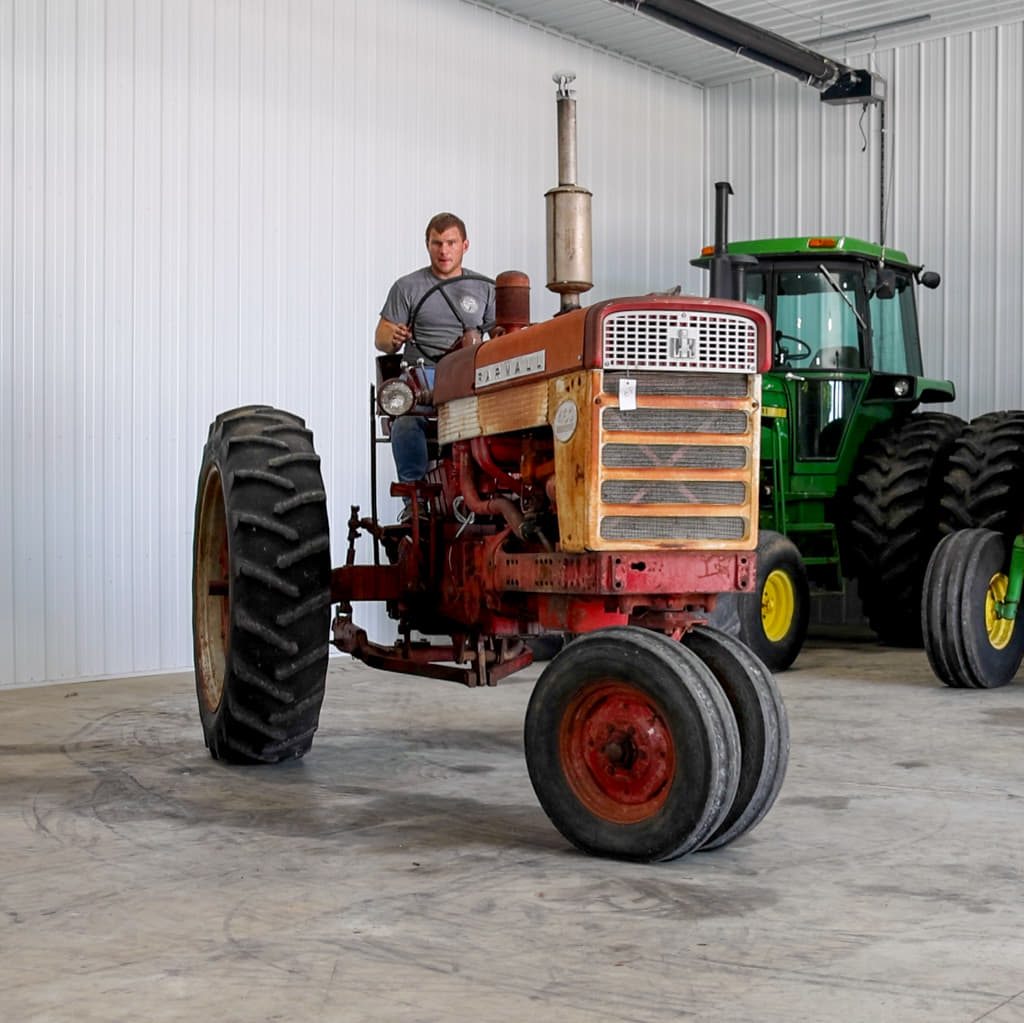
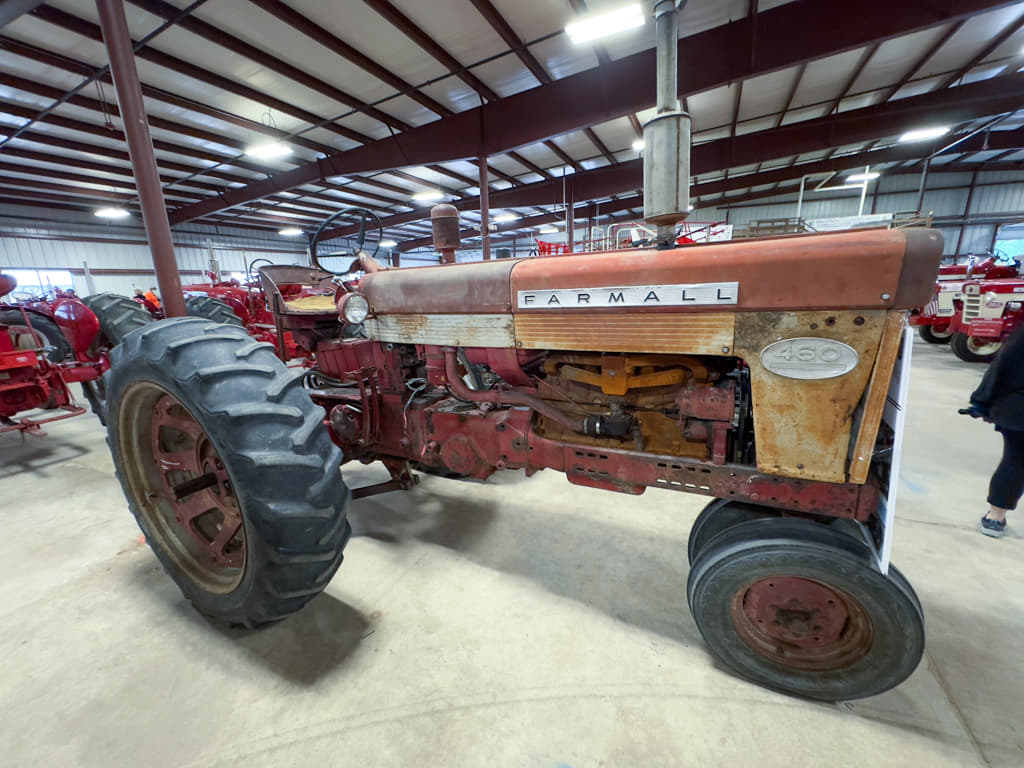
There are plenty of ways for a tractor to become historically important. Some become famous because they sold in huge numbers. Others introduced major engineering changes. A few become collectible simply because there weren’t many of ’em around, or very few survived. This Farmall 460, on the other hand, matters for a much simpler reason. It was first.
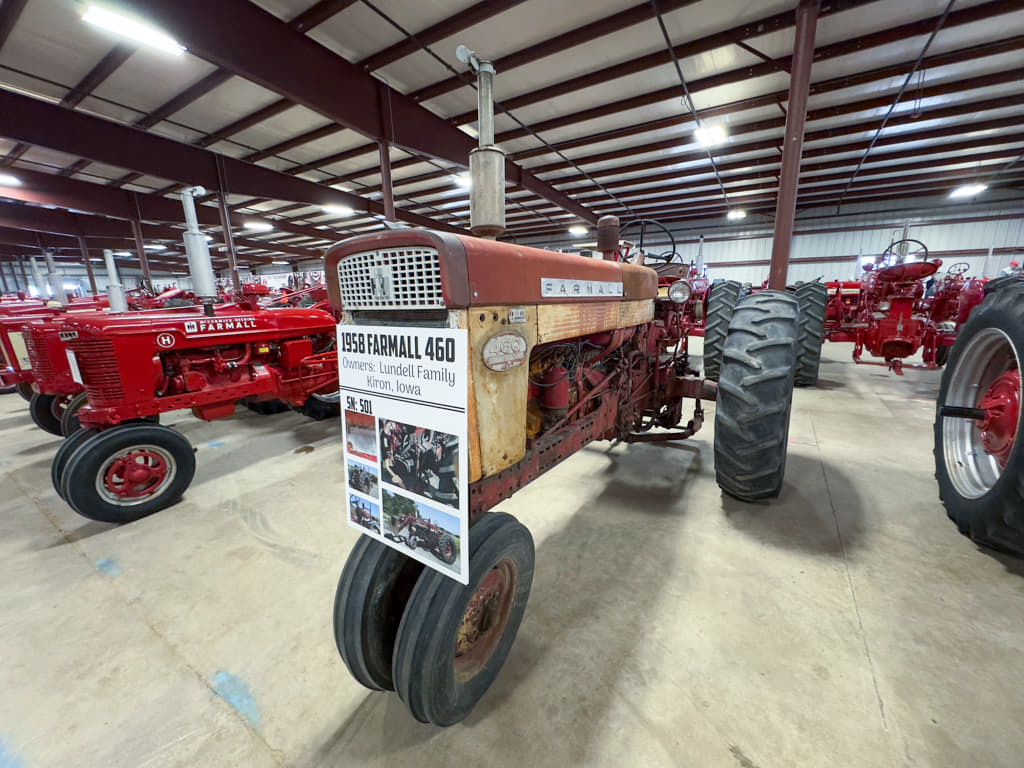
For most Farmall & IH tractors, serial number 501 has traditionally marked the beginning of production. That makes this tractor a significant piece of International Harvester history. The auction is open now (link above), and it’ll sell September 9 as part of the Lundell collection with Paulsen Auctions.
Before we get to number 501, though, let’s talk about what the 460 represented. While it had fresh styling and a six-cylinder engine, IH didn’t start with a completely blank sheet. Instead, the company set out to modernize a tractor family that had already been evolving for nearly 20 years.
(And yes, I know I said Harvard Focus Group in the title, and thus far no Ivy League scholars have entered the chat. Keep reading…)
From the H to the 460
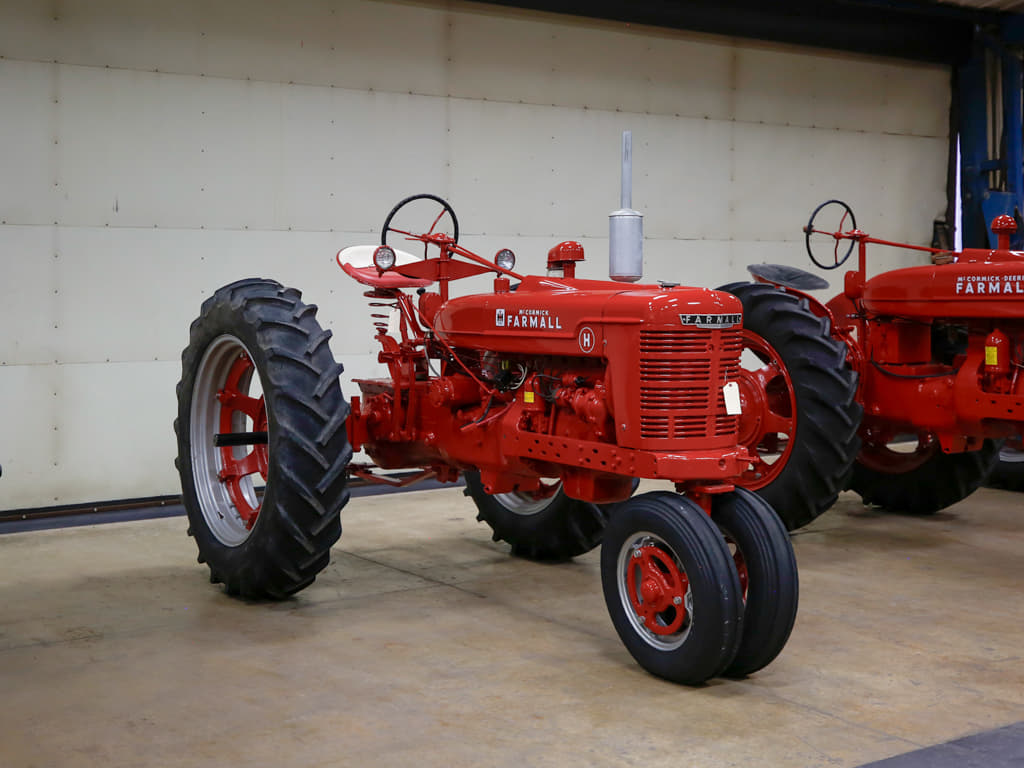
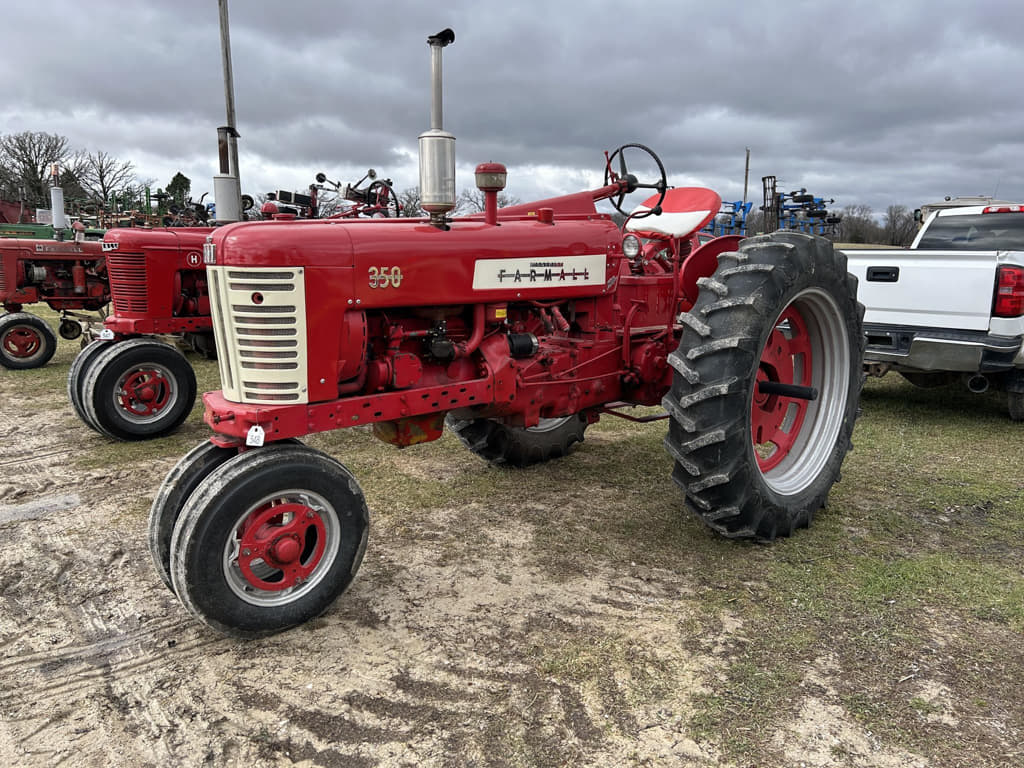
The Farmall H arrived in 1939 and became one of International Harvester’s greatest successes. It was simple, durable, useful, and adaptable. More importantly, it gave IH a foundation that engineers could improve for years. The H eventually became the Super H. Next came the Farmall 300 in the mid-1950s, followed by the 350.
By the time the 350 arrived, IH had added plenty of capability to the basic platform. Torque Amplifier, independent PTO, and Fast Hitch gave farmers more flexibility than earlier tractors offered. Still, the family resemblance remained obvious.
That mattered because farming was changing quickly. Farms were growing. Implements were getting wider. Farmers needed more horsepower and expected more from the tractor itself. Furthermore, longer days also made operator comfort increasingly important. A farmer might spend ten or twelve hours in the seat at a clip, not just a few.
IH still held a dominant position in the tractor market. However, the competition was coming, and Harvester knew it.
The 460 became one answer to that pressure.
What changed with the 460?
The Farmall 460 replaced the 350 and became IH’s smallest six-cylinder tractor in the new lineup. That was a pretty big deal, and the powerplant grabbed most of the attention. Gas and LP tractors used a 221-cubic-inch engine. Diesel models used IH’s 236-cubic-inch six. The diesel also used a direct-start system with glow plugs. Earlier IH diesels often started on gasoline before switching to diesel fuel. That change simplified the starting procedure considerably. And while 460 diesels never became famous for loving bitterly cold mornings, at least farmers no longer needed to explain the gasoline-start sequence to every new operator.
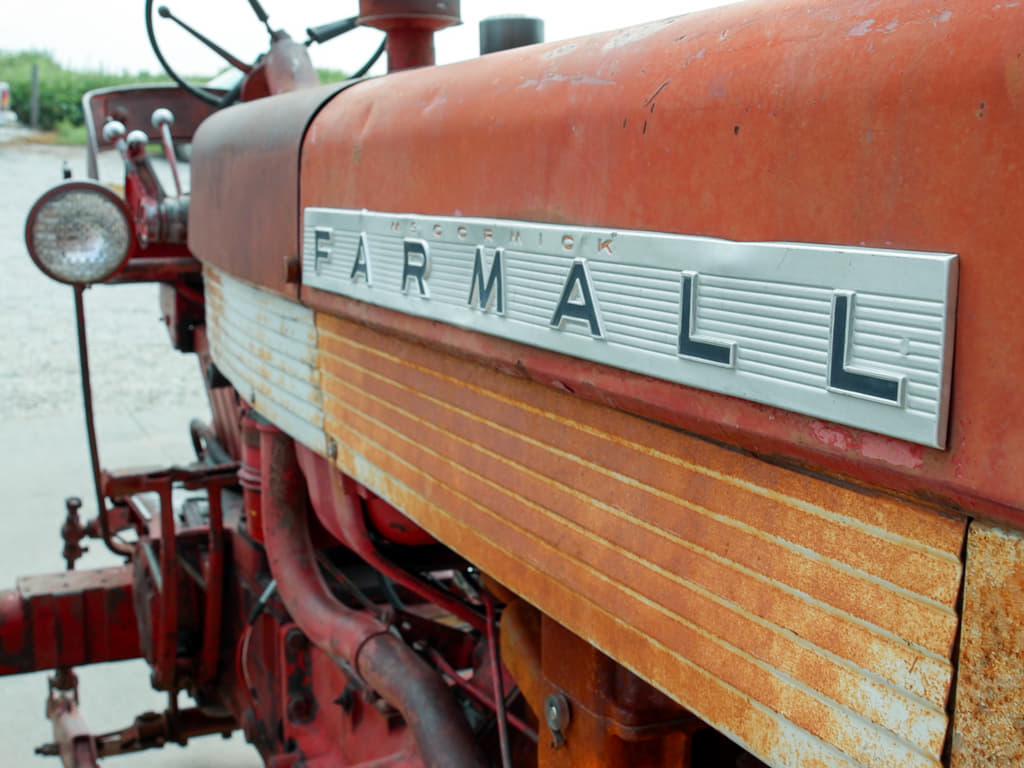
IH changed far more than the engine though. The 460 received snazzy new sheet metal courtesy of Raymond Loewy’s styling, revised hydraulics, and several comfort improvements. Engineers repositioned the steering wheel and improved the seat and suspension as well. And between the Torque Amplifier, independent PTO and Fast Hitch, they gave the 460 plenty of versatility for its size.
At the end of the day, it was a lot more than stuffing two more cylinders under the hood of a 350. Harvester really wanted the tractor to feel newer, smoother, and more comfortable to operate. They were all focus areas with roots in conversations that started years earlier in Harvard.
No, not that Harvard.
Harvard, Illinois.
Dealer- (and customer) driven development
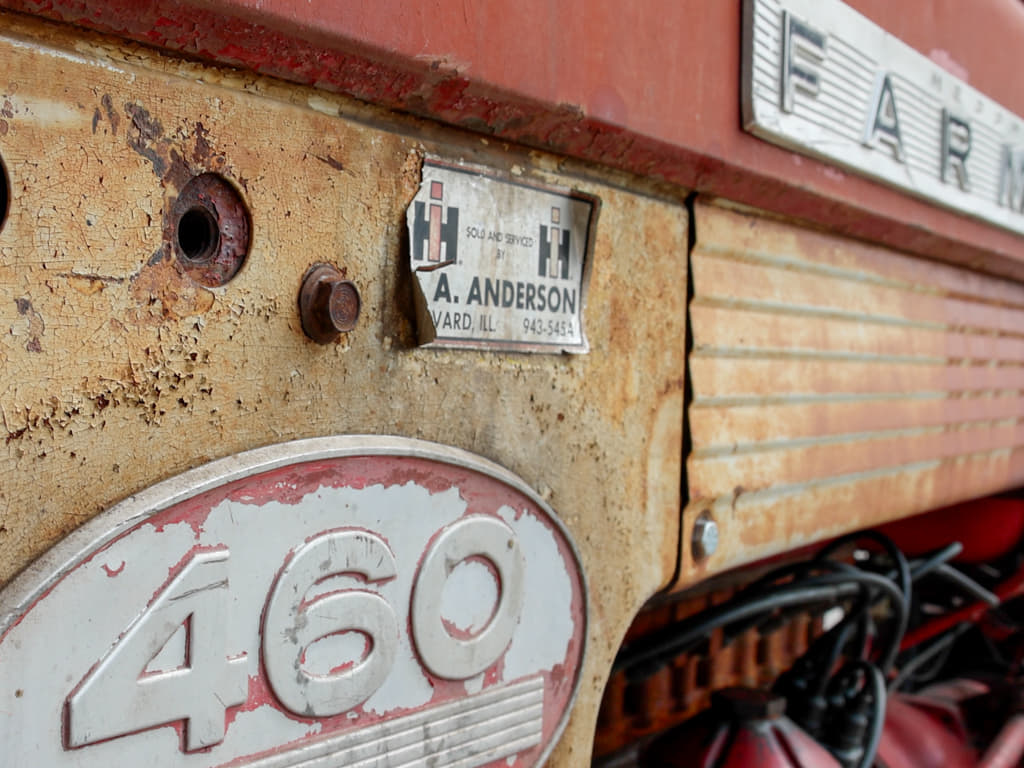
A.A. “Andy” Anderson was an International Harvester dealer in Harvard, Illinois, and he played an interesting role in the development of the 40 and 60 Series. Much of that story survives thanks to the work collected in Lee Klancher’s Red Tractors books, including archival research by longtime IH historian Guy Fay. Fay, Klancher, and multiple others spent years working through original company records, and some of the details they uncovered give us a pretty good look at how Anderson fit into the picture.
In the early 1950s, IH engineering chief Mark Keeler and product specialist M.O. Curvey visited dealers for feedback. They wanted to know what farmers expected from the next generation. One of their early stops was Anderson’s dealership, and Andy’s message was loud and clear. Make ’em nicer to run. He emphasized comfort and convenience more than raw horsepower.
That all made a great deal of sense, too, as farmers spent longer days on increasingly more important machines.
At any rate, Harvester paid attention to what Andy told them. Five years later, in the spring of 1958, IH returned to Harvard with one of the tractors that emerged from that development process. I’m not sure if it was a 460 or a 560, but regardless, Andy wasn’t interested in keeping it quiet for long.
The Main Street Focus Group
As the story goes, IH brought one of the still-secret tractors back to Harvard for Anderson to see. I’m not sure if Andy went off-script that afternoon or not, but upon seeing the finished product for the first time, he climbed up on the seat and drove the tractor right down the main drag there in Harvard. IH photographers stood along the route and even positioned themselves on rooftops. Farmers gathered around the machine when it stopped. Some climbed into the seat and studied the controls. Others listened to the six-cylinder engine.
Essentially, Andy Anderson had created a live focus group in downtown Harvard. And from where I’m sitting, it seems like a really fitting way for Harvester to have closed that loop. Five years earlier, the company asked Andy, “How do we make these better?” Now they returned to show him that they’d listened. More importantly, IH could watch farmers interact with the new tractor before the national launch.
That moment also showed how seriously the company viewed the new line. IH wasn’t preparing another minor annual update. They wanted farmers to sit up and take notice.
Now, one thing that I think is worthy of note. If the tractor that Andy drove down the main drag was in fact a 460, I think there’s a significant chance that it could be the very same 460 that the Lundell family is selling at auction. IH visited Harvard just a few months before the public unveiling in July of 1958. It’s quite possible that the first tractors had already been built by then, and that’s what IH brought for him to see. Wouldn’t that be something?
A “New World of Power”
When International Harvester officially introduced the new tractors in July 1958 at the new R&D facility in Hinsdale, IL, they went big. Thousands of dealers attended the event. The company presented its latest tractors under the “New World of Power” campaign.
For row-crop farmers, the Farmall 460 and 560 generated much of the excitement. Both introduced six-cylinder power where IH customers were fairly accustomed to four-cylinder tractors. The new machines looked modern, sounded different, and promised greater refinement. The 460 carried a four-plow rating, the larger 560 was good for five plows.
International Harvester also expected far more from the 460 platform than ordinary row-crop work. The basic design appeared in Utility, Wheatland, Industrial, Orchard, Grove, Hi-Clear, and High Utility forms. They also adapted the platform for cotton harvesters and other specialty machines.
Today, collectors usually picture the narrow-front Farmall first. However, that familiar configuration was really only part of the 460 story. IH designed the platform for a surprisingly broad range of customers. That ambition would help the 460 find plenty of work.
Unfortunately, it also arrived with a problem that quickly overshadowed much of the launch.
About that rear end
You can’t tell the Farmall 460 story without discussing the rear-end failures.
Over time, the story has become pretty simple. IH supposedly bolted a stronger engine onto an old rear end and learned that horsepower always finds weakness. Frankly, there’s lots of truth to that, but the real story has a few more layers. The 460 still carried architecture with roots in the older Farmall family. However, IH engineers made substantial changes before production. They also tested the tractors extensively.
Problems appeared under certain combinations of heavy load and strong traction (spring tillage in gumbo soil, etc). Differential and final-drive components could fail.
More horsepower contributed to the trouble, but I’m about certain that it was a mix of things. Material quality, manufacturing changes, and lubrication probably all played roles. These things happen. Regardless of the exact mix, IH faced a very public engineering problem, and to their credit, they reacted quickly to fix the issue. Dealers received updated parts and procedures to fix the tractors. IH also doubled the warranty and launched a large field campaign covering the 460, 560, and 660.
The repair effort solved the mechanical issue, but at some level, the damage was already done. Harvester would have to work for years to fix their reputation.
Bigger than the failure story
The rear-end problem deserves its place in the 460 story. However, I don’t think it’s fair to let it become the entire story. In later years, I’ve read interviews with former IH engineers who described the overall failure rate as being relatively small (which leads me to believe that a bad batch of steel may have been a root cause). Once repaired, plenty of 60-Series tractors returned to work and stayed there for years. Lots of them continue to earn their keep today.
The damage to IH’s reputation proved much larger than the number of failures. When a market leader stumbles, everybody notices, including competitors. Still, despite the PR nightmare, farmers continued buying the 460, and IH kept producing it through 1963.
I think that’s important because like quite a few tractors of the era, the 460 occupied an awkward but important place in tractor history. It carried plenty of old IH DNA while introducing ideas that pointed toward the future. It also introduced smoother six-cylinder power into the middle of the lineup, and reflected a stronger emphasis on comfort, hydraulics, and versatility. All of these advancements would drive future development for years to come.
So in that sense, I feel like the 60-Series became a bridge between. IH hadn’t completely left the past behind, but it was clearly moving forward. When the 706, 806, and 1206 arrived on the market a few years later, it was a genuinely new era for red tractors.
That brings us back to the tractor selling in Kiron, IA.
Serial number 501
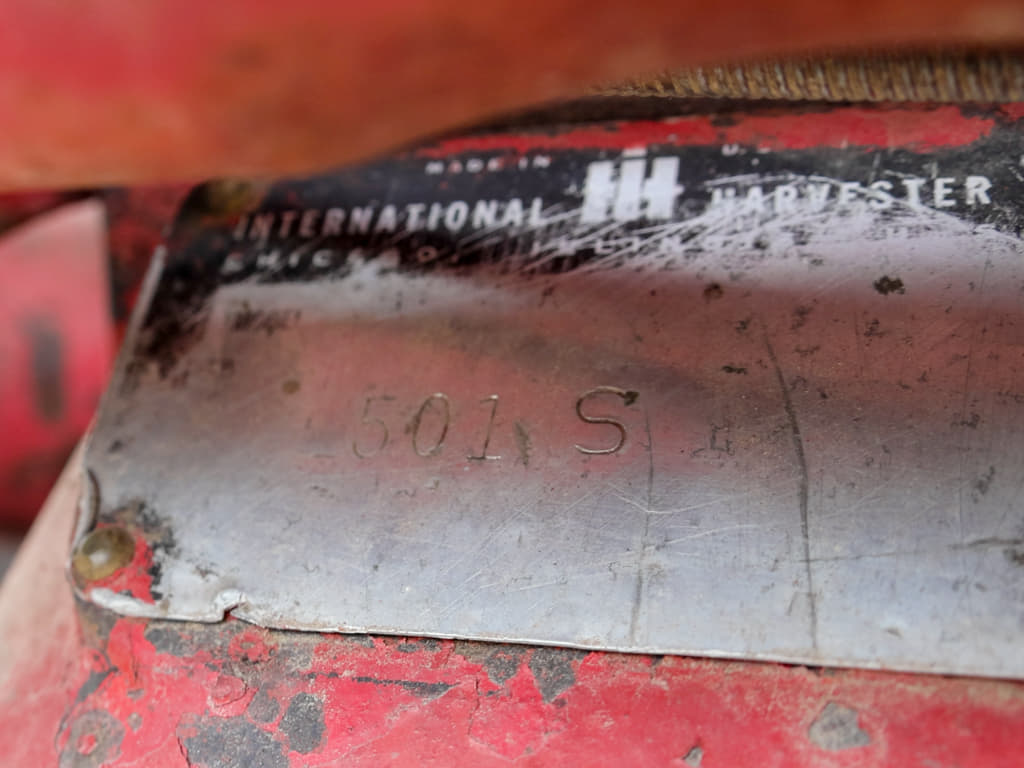
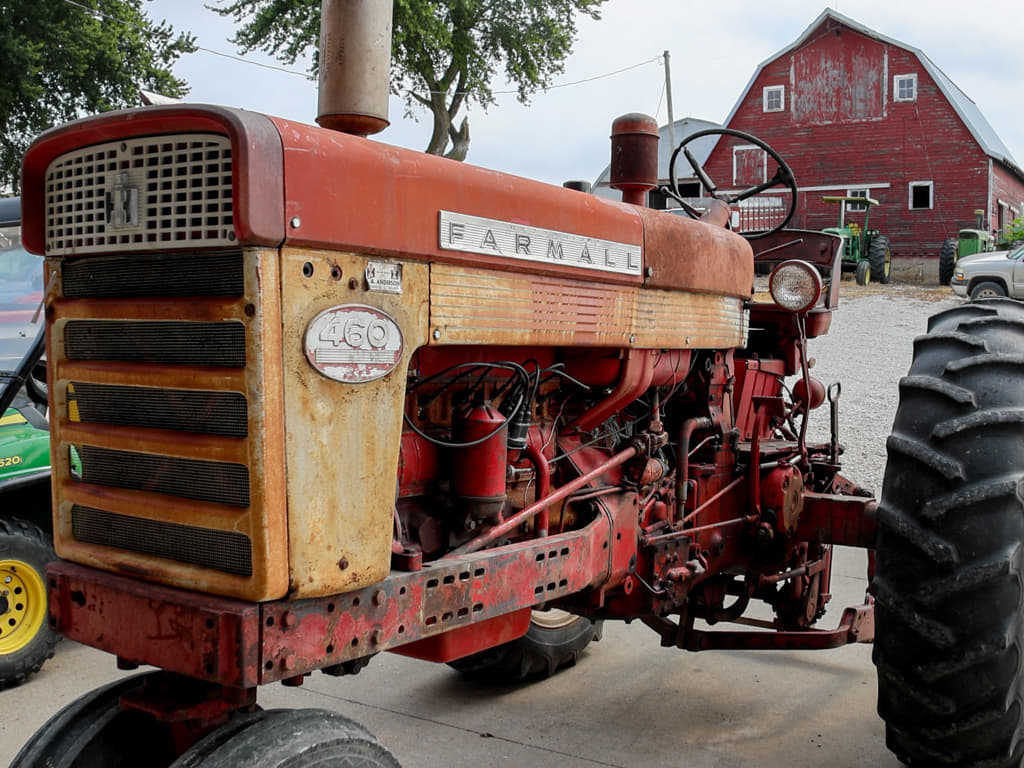
There are certainly nicer Farmall 460s, and we’ve all seen them. There are lots of lower-houred examples too, I’m sure. There’s plenty of oddball-spec units out there too. But there’s only one serial number 501. From where I’m sitting, that definitely qualifies it as interesting iron.
Jim Lundell told me the story of how they bought this tractor a couple of weeks ago. A friend picked it up at a Mecum Gone Farmin’ auction in the fall of 2020. It didn’t look much different than it does today, other than having a New Idea loader bolted to it. At any rate, a few years later when the friend was downsizing his collection a bit, Jim jumped on it.
Restore or preserve?
For quite a while, I think the plan was to give this tractor a full restoration. That changed after Jim displayed it at the 2024 Red Power Roundup in Spencer, Iowa and spent time talking with the red tractor crowd. They reminded him of something collectors say for good reason: “They’re only original once.”
Jim took that to heart, and frankly, I’m glad he did.
There is one important caveat, though. We really don’t know much about this tractor’s life before 2020. It might’ve spent decades exactly as it sits today. On the other hand, maybe a tree limb crushed the hood in 1973. Maybe somebody wrecked the crankshaft in the 80s. We simply don’t know. That’s important, because “original” can be a slippery word. I’d rather not imply that every piece on serial number 501 has been there since 1958 when we can’t prove it.
What we can say is that the tractor wears a lot of old, honest character today. The A.A. Anderson dealer decal on the nose is a perfect example. A full repaint would almost certainly erase details like that, and a restored 501 could end up looking much like any other nicely finished 460.
Mechanically, it’s in good shape. I was onsite with the Lundell family recently, and it ran just fine. It could use a seat and some fresh rubber, but fundamentally, it appears sound. Cosmetically, I’m not sure what more they could do to clean it up without putting what’s there at risk, y’know?
Regardless, I’m not about to tell somebody else what to do with their tractor. That’s not my lane. But given what survives today, I’d lean toward preservation before restoration.
Wrapping it up…
It’s a neat tractor with a ton of character, and it’s got a distinction that no other Farmall 460 has. It’s the first one. All the rest of ’em? They’re just copies!
I really don’t know what this one is going to go for, but I can’t imagine it’s less than $10-15K. There are a lot of collectors out there who grew up on a 460, and I’d imagine there are plenty of ’em who still have a soft spot for them. If two of them decide to get into a checkbook-measuring contest, you never know what might happen! It’ll be interesting to see where this one lands when the dust settles!
Here’s the link to the full sale, by the way. There’s a bunch of cool tractors on this one, and they’re not all red, either! The Lundell family has lots of green in their DNA!


